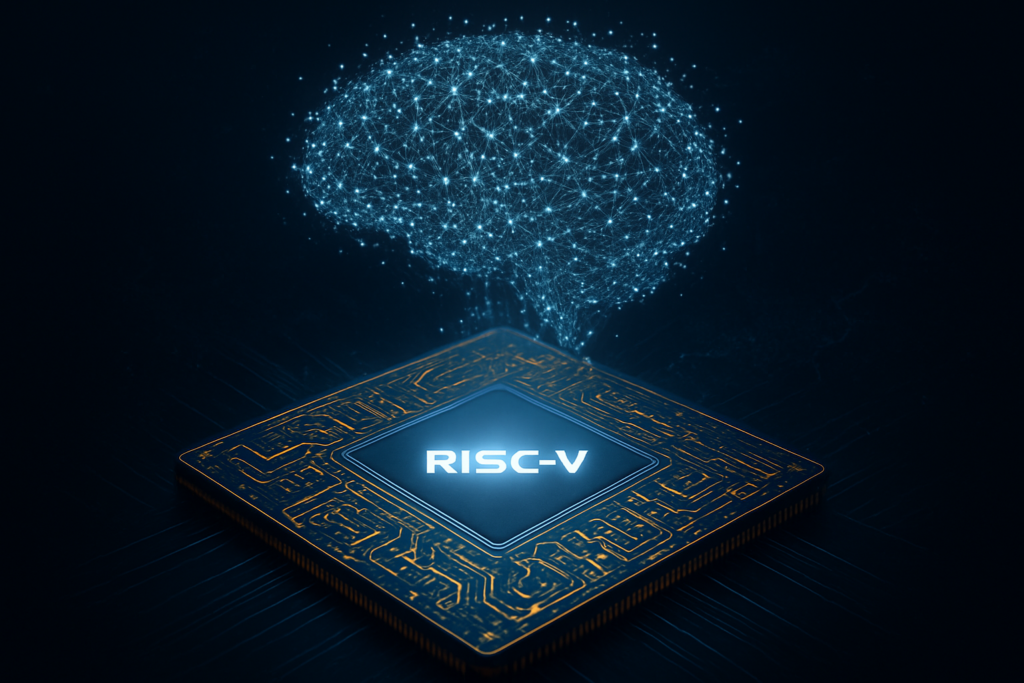
The semiconductor landscape has reached a historic turning point. As of February 2026, the once-unshakeable duopoly of x86 and ARM is facing its most significant challenge yet from RISC-V, the open-standard Instruction Set Architecture (ISA). What began as an academic project at UC Berkeley has matured into a cornerstone of high-end computing, driven by a massive surge in industrial adoption and sovereign government backing.
The most striking evidence of this shift comes from NVIDIA (NASDAQ: NVDA), which has officially crossed the milestone of shipping over one billion RISC-V cores. These are not merely secondary components; they are critical to the operation of the world's most advanced AI and graphics hardware. This milestone, paired with the European Union’s aggressive €270 million investment into the architecture, signals that RISC-V has moved beyond the "internet of things" (IoT) and is now a dominant force in the high-performance computing (HPC) and data center markets.
Technical Mastery: How NVIDIA Orchestrates Complexity via RISC-V
NVIDIA’s transition to RISC-V represents a profound shift in how modern GPUs are managed. By February 2026, the company has successfully integrated custom RISC-V microcontrollers across its entire high-end portfolio, including the Blackwell and newly launched Vera Rubin architectures. These chips no longer rely on the proprietary "Falcon" controllers of the past. Instead, each high-end GPU now houses between 10 and 40 specialized RISC-V cores. These include the NV-RISCV32 for simple control logic, the NV-RISCV64—a 64-bit out-of-order, dual-issue core for heavy management—and the high-performance NV-RVV, which utilizes a 1024-bit vector extension to handle data-heavy internal telemetry.
These cores are the unsung heroes of AI performance, managing critical functions like Secure Boot and Authentication, which form the hardware root-of-trust essential for secure multi-tenant data centers. They also handle fine-grained Power Regulation, adjusting voltage and thermal limits at microsecond intervals to squeeze every ounce of performance from the silicon while preventing thermal throttling. Perhaps most importantly, the RISC-V-based GPU System Processor (GSP) offloads complex kernel driver tasks from the host CPU. By handling these functions locally on the GPU using the open architecture, NVIDIA has drastically reduced latency and overhead, allowing its AI accelerators to communicate more efficiently across massive NVLink clusters.
Strategic Disruption: The End of the x86 and ARM Hegemony
This architectural shift is sending shockwaves through the corporate boardrooms of Silicon Valley. Tech giants such as Meta Platforms, Inc. (NASDAQ: META), Alphabet Inc. (NASDAQ: GOOGL), and Qualcomm (NASDAQ: QCOM) have significantly pivoted their R&D toward RISC-V to gain "architectural sovereignty." Unlike ARM’s licensing model, which historically restricted the addition of custom instructions, RISC-V allows these companies to build bespoke silicon tailored to their specific AI workloads without paying the "ARM Tax" or being tethered to a single vendor’s roadmap.
The competitive implications for Intel (NASDAQ: INTC) and Advanced Micro Devices (NASDAQ: AMD) are stark. While x86 remains the incumbent for legacy server applications, the high-growth "bespoke silicon" market—where hyperscalers build their own chips—is rapidly trending toward RISC-V. Companies like Tenstorrent, led by industry veteran Jim Keller, have already commercialized accelerators like the Blackhole AI chip, featuring 768 RISC-V cores. These chips are being adopted by AI startups as cost-effective alternatives to mainstream hardware, leveraging the open-source nature of the ISA to innovate faster than traditional proprietary cycles allow.
Geopolitical Sovereignty: Europe’s €270 Million Bet on Autonomy
Beyond the corporate race, the surge of RISC-V is a matter of geopolitical strategy. The European Union has committed €270 million through the EuroHPC Joint Undertaking to build a self-sustaining RISC-V ecosystem. This investment is the bedrock of the EU Chips Act, designed to ensure that European infrastructure is no longer solely dependent on U.S. or UK-controlled technologies. By February 2026, this initiative has already yielded results, such as the Technical University of Munich’s (TUM) announcement of the first European-designed 7nm neuromorphic AI chip based on RISC-V.
This movement toward "technological sovereignty" is more than just a defensive measure; it is a full-scale offensive. Projects like TRISTAN and ISOLDE have standardized industrial-grade RISC-V IP for the automotive and industrial sectors, creating a verified "European core" that competes directly with ARM’s Cortex-A series. For the first time in decades, Europe has a viable path to architectural independence, significantly reducing the risk of being caught in the crossfire of international trade disputes or export controls. In this context, RISC-V is becoming the "Linux of hardware"—a neutral, high-performance foundation that no single nation or company can turn off.
The Horizon: AI Fusion Cores and the Road to 2030
The future of RISC-V in the high-end market appears even more ambitious. The industry is currently moving toward the "RVA23" enterprise standard, which will bring even greater parity with high-end ARM Neoverse and x86 server chips. New entrants like SpacemiT and Ventana Micro Systems are already sampling server-class processors with up to 192 cores per socket, aiming for the 3.6GHz performance threshold required for hyperscale environments. We are also seeing the emergence of "AI Fusion" cores, where RISC-V CPU instructions and AI matrix math are integrated into a single pipeline, potentially simplifying the programming model for the next generation of generative AI models.
However, challenges remain. While the hardware is maturing rapidly, the software ecosystem—though bolstered by the RISE (RISC-V Software Ecosystem) initiative—still has gaps in specific enterprise applications and high-end gaming. Experts predict that the next 24 months will be a "software sprint," where the community works to ensure that every major Linux distribution, compiler, and database is fully optimized for the unique vector extensions that RISC-V offers. If the current trajectory continues, the architecture is expected to capture over 25% of the total data center market by the end of the decade.
A New Era for Computing
The milestone of one billion cores at NVIDIA and the strategic backing of the European Union represent a permanent shift in the semiconductor power dynamic. RISC-V is no longer an underdog; it is a tier-one architecture that provides the flexibility, security, and performance required for the AI era. By breaking the duopoly of x86 and ARM, it has introduced a level of competition and innovation that the industry has not seen in over thirty years.
As we look ahead, the significance of this development in AI history cannot be overstated. It represents the democratization of high-performance silicon design. In the coming weeks and months, watch for more major cloud providers to announce their own custom RISC-V "cobalt-class" processors and for further updates on the integration of RISC-V into consumer-grade high-end electronics. The era of the open ISA is here, and it is reshaping the world one core at a time.
This content is intended for informational purposes only and represents analysis of current AI developments.
TokenRing AI delivers enterprise-grade solutions for multi-agent AI workflow orchestration, AI-powered development tools, and seamless remote collaboration platforms.
For more information, visit https://www.tokenring.ai/.