As air travel enters a new era of climate-driven instability, Emirates has emerged as a frontrunner in the race to conquer the invisible threat of turbulence. By late 2025, the Dubai-based carrier has fully integrated a sophisticated suite of AI predictive models designed to forecast atmospheric disturbances with unprecedented accuracy. This technological shift marks a departure from traditional reactive weather monitoring, moving toward a proactive "nowcasting" ecosystem that ensures passenger safety and operational efficiency in an increasingly chaotic sky.
The significance of this development cannot be overstated. With Clear Air Turbulence (CAT) on the rise due to shifting jet streams and global temperature changes, the aviation industry has faced a growing number of high-profile incidents. Emirates' move to weaponize data against these invisible air pockets represents a major milestone in the "AI-ification" of the cockpit, transforming the flight deck from a place of observation to a hub of real-time predictive intelligence.
Technical Foundations: From Subjective Reports to Objective Data
The core of Emirates' new capability lies in its multi-layered AI architecture, which moves beyond the traditional "Pilot Report" (PIREP) system. Historically, pilots would verbally report turbulence to air traffic control, a process that is inherently subjective and often delayed. Emirates has replaced this with a system centered on Eddy Dissipation Rate (EDR)—an objective, automated measurement of atmospheric energy. This data is fed into the SkyPath "nowcasting" engine, which utilizes machine learning to analyze real-time sensor feeds from across the fleet.
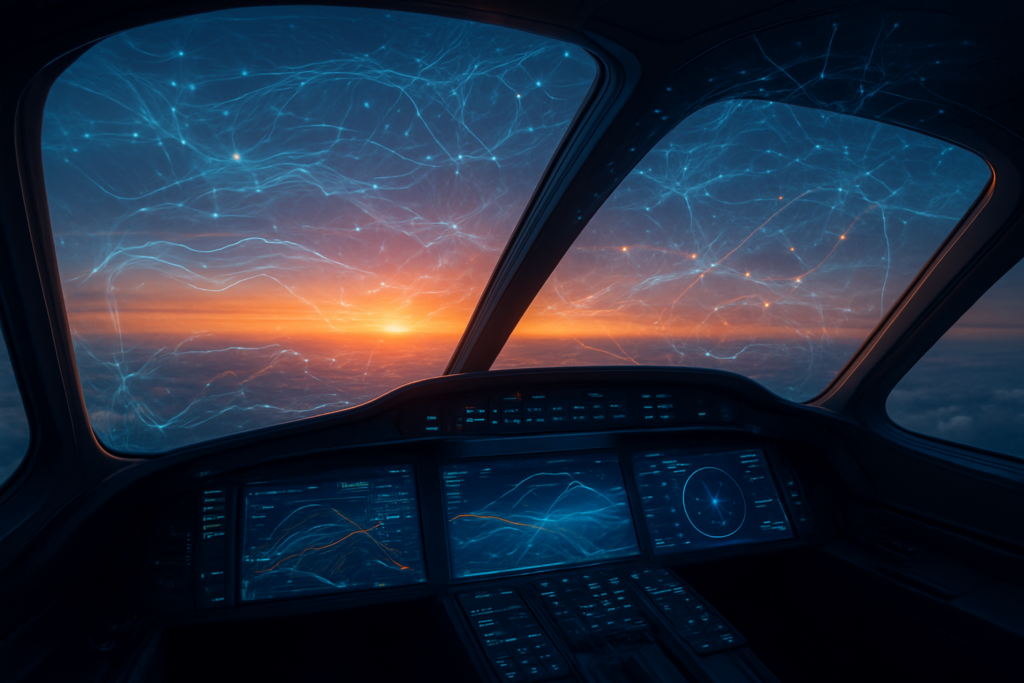
One of the most innovative aspects of this technical stack is the use of patented accelerometer technology housed within the iPads provided to pilots by Apple Inc. (NASDAQ: AAPL). By utilizing the high-precision motion sensors in these devices, Emirates turns every aircraft into a mobile weather station. These "crowdsourced" vibrations are analyzed by AI algorithms to detect micro-movements in the air that are invisible to standard onboard radar. This data is then visualized for flight crews through Lufthansa Systems' (ETR: LHA) Lido mPilot software, providing a high-resolution, 4D graphical overlay of turbulence, convection, and icing risks for the next 12 hours of flight.
This approach differs fundamentally from previous technologies by focusing on "sensor fusion." While traditional radar detects moisture and precipitation, it is blind to CAT. Emirates’ AI models bridge this gap by synthesizing data from ADS-B transponder feeds, satellite imagery, and the UAE’s broader AI infrastructure, which includes G42’s generative forecasting models powered by NVIDIA (NASDAQ: NVDA) H100 GPUs. The result is a system that can predict a turbulence encounter 20 to 80 seconds before it happens, allowing cabin crews to secure the cabin and pause service well in advance of the first jolt.
Market Dynamics: The Aviation AI Arms Race
Emirates' aggressive adoption of AI has sent ripples through the competitive landscape of global aviation. By positioning itself as a leader in "smooth flight" technology, Emirates is putting pressure on rivals like Qatar Airways and Singapore Airlines to accelerate their own digital transformations. Singapore Airlines, in particular, fast-tracked its integration with the IATA "Turbulence Aware" platform following severe incidents in 2024, but Emirates’ proprietary AI layer—developed in its dedicated AI Centre of Excellence—gives it a strategic edge in data processing speed and accuracy.
The development also benefits a specific cluster of tech giants and specialized startups. Companies like IBM (NYSE: IBM) and The Boeing Company (NYSE: BA) are deeply involved in the data analytics and hardware integration required to make these AI models functional at 35,000 feet. For Boeing and Airbus (EPA: AIR), the ability to integrate "turbulence-aware" algorithms directly into the flight management systems of the 777X and A350 is becoming a major selling point. This disruption is also impacting the meteorological services sector, as airlines move away from generic weather providers in favor of hyper-local, AI-driven "nowcasting" services that offer a direct ROI through fuel savings and reduced maintenance.
Furthermore, the operational benefits provide a significant market advantage. IATA estimates that AI-driven route optimization can improve fuel efficiency by up to 2%. For a carrier the size of Emirates, this translates into tens of millions of dollars in annual savings. By avoiding the structural stress caused by severe turbulence, the airline also reduces "turbulence-induced" maintenance inspections, ensuring higher aircraft availability and a more reliable schedule—a key differentiator in the premium long-haul market.
The Broader AI Landscape: Safety in the Age of Climate Change
The implementation of these models fits into a larger trend of using AI to mitigate the effects of climate change. As the planet warms, the temperature differential between the poles and the equator is shifting, leading to more frequent and intense clear-air turbulence. Emirates’ AI initiative is a case study in how machine learning can be used for climate adaptation, providing a template for other industries—such as maritime shipping and autonomous trucking—that must navigate increasingly volatile environments.
However, the shift toward AI-driven flight paths is not without its concerns. The aviation research community has raised questions regarding "human-in-the-loop" ethics. There is a fear that as AI becomes more proficient at suggesting "calm air" routes, pilots may suffer from "de-skilling," losing the manual intuition required to handle extreme weather events that fall outside the AI's training data. Comparisons have been made to the early days of autopilot, where over-reliance led to critical errors in rare emergency scenarios.
Despite these concerns, the move is widely viewed as a necessary evolution. The IATA "Turbulence Aware" platform now manages over 24.8 million reports, creating a massive global dataset that serves as the "brain" for these AI models. This level of industry-wide data sharing is unprecedented and represents a shift toward a "collaborative safety" model, where competitors share real-time sensor data for the collective benefit of passenger safety.
Future Horizons: Autonomous Adjustments and Quantum Forecasting
Looking toward 2026 and beyond, the next frontier for Emirates is the integration of autonomous flight path adjustments. While current systems provide recommendations to pilots, research is underway into "Adaptive Separation" algorithms. These would allow the aircraft’s flight management computer to make micro-adjustments to its trajectory in real-time, avoiding turbulence pockets without the need for manual input or taxing air traffic control voice frequencies.
On the hardware side, the industry is eyeing the deployment of long-range Lidar (Light Detection and Ranging). Unlike current radar, Lidar can detect air density variations up to 12 miles ahead, providing even more lead time for AI models to process. Furthermore, the potential of quantum computing—pioneered by companies like IBM—promises to revolutionize the underlying weather models. Quantum simulations could resolve chaotic air currents at a molecular level, allowing for near-instantaneous recalculation of global flight paths as jet streams shift.
The primary challenge remains regulatory approval and public trust. While the technology is advancing rapidly, the Federal Aviation Administration (FAA) and European Union Aviation Safety Agency (EASA) remain cautious about fully autonomous path correction. Experts predict a "cargo-first" approach, where autonomous turbulence avoidance is proven on freight routes before being fully implemented on passenger-carrying flights.
Final Assessment: A Milestone in Aviation Intelligence
Emirates' deployment of AI predictive models for turbulence is a defining moment in the history of aviation technology. It represents the successful convergence of "Big Data," mobile sensor technology, and advanced machine learning to solve one of the most persistent and dangerous challenges in flight. By moving from reactive to proactive safety measures, Emirates is not only enhancing passenger comfort but also setting a new standard for operational excellence in the 21st century.
The key takeaways for the industry are clear: data is the new "calm air," and those who can process it the fastest will lead the market. In the coming months, watch for other major carriers like Delta Air Lines (NYSE: DAL) and United Airlines (NASDAQ: UAL) to announce similar proprietary AI enhancements as they seek to keep pace with the Middle Eastern giant. As we look toward the end of the decade, the "invisible" threat of turbulence may finally become a visible, and avoidable, data point on a pilot's screen.
This content is intended for informational purposes only and represents analysis of current AI developments.
TokenRing AI delivers enterprise-grade solutions for multi-agent AI workflow orchestration, AI-powered development tools, and seamless remote collaboration platforms.
For more information, visit https://www.tokenring.ai/.