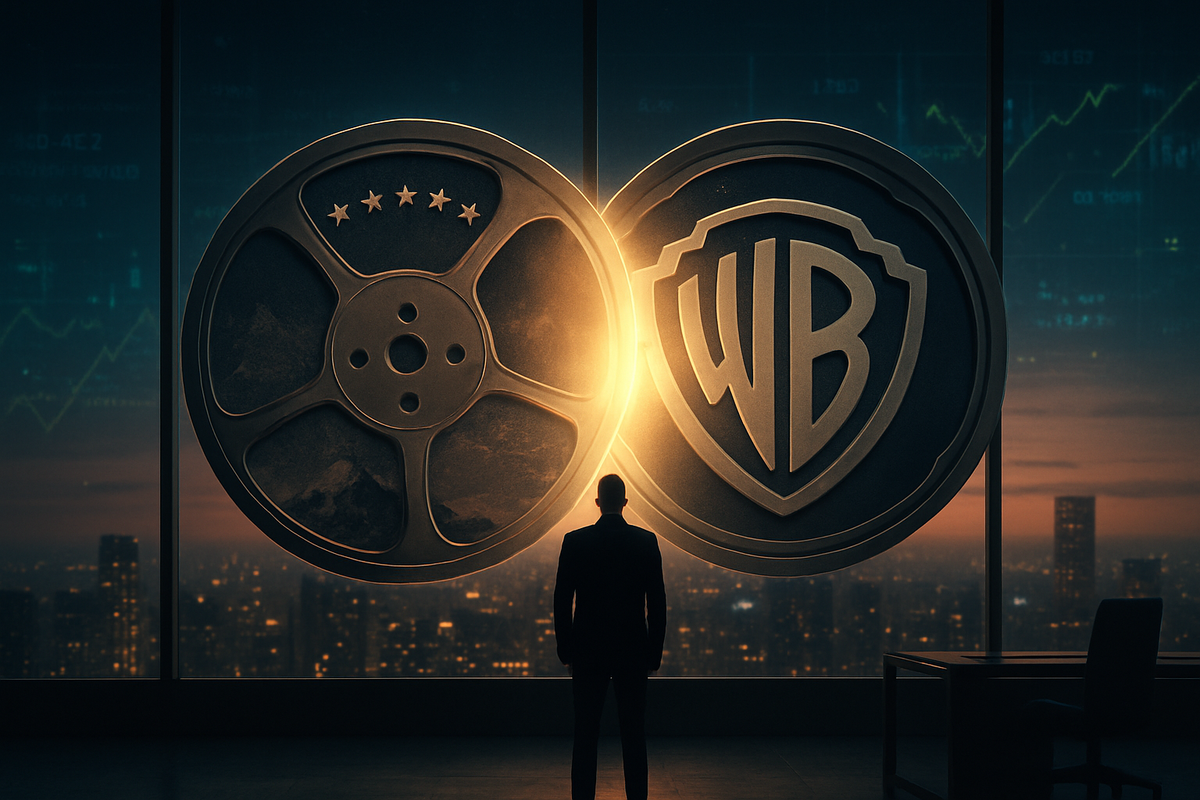
In a move that has sent shockwaves through the global entertainment landscape, the newly formed Paramount Skydance Corporation (NASDAQ: PSKY) announced on February 27, 2026, a definitive agreement to acquire Warner Bros. Discovery (NASDAQ: WBD) in an all-cash transaction valued at approximately $110 billion in enterprise value. The deal, which comes just six months after the finalized merger between Skydance Media and Paramount Global, marks the most significant consolidation in media history and signals the potential end of the fragmented "Streaming Wars" era as a single content superpower emerges to challenge the dominance of Big Tech.
The immediate implications of this "mega-merger" are profound, as it unites two of the most storied libraries in Hollywood—bringing Harry Potter, Game of Thrones, and the DC Universe under the same corporate umbrella as Mission: Impossible, Star Trek, and the NFL on CBS. While the announcement triggered a nearly 21% surge in Paramount Skydance’s stock initially, the deal faces a gauntlet of regulatory hurdles and a daunting $79 billion debt load that has already prompted credit agencies to downgrade the new entity to "junk" status. As of March 5, 2026, the industry is left grappling with the reality of a duopolistic future where only a handful of giants can afford to compete at the highest level of global production.
A Content Superpower is Born: The Road to the Merger
The acquisition of Warner Bros. Discovery follows a turbulent and aggressive timeline of industry reshuffling. Following the August 7, 2025, closure of the Skydance-Paramount merger—led by David Ellison and backed by the financial might of the Ellison family and RedBird Capital—the new entity quickly pivoted from integration to expansion. By late 2025, a fierce bidding war erupted for Warner Bros. Discovery, which had struggled under the weight of its own debt and a stagnating linear television business. Netflix (NASDAQ: NFLX) had initially entered the fray in December 2025 with a $72 billion bid for WBD’s "Studios and Streaming" assets, while Comcast (NASDAQ: CMCSA) proposed a merger of Universal and Warner Bros. studios.
However, Paramount Skydance emerged victorious by offering a comprehensive, all-cash bid of $31.00 per share for the entirety of WBD, including the legacy linear networks like CNN and Discovery that other suitors sought to avoid. This strategic "buy-all" approach was reportedly orchestrated by David Ellison, now Chairman and CEO of Paramount Skydance, who secured over $54 billion in new debt commitments from a banking syndicate led by Bank of America (NYSE: BAC) and Citigroup (NYSE: C), alongside $47 billion in equity backing. The board of Warner Bros. Discovery, led by CEO David Zaslav, ultimately accepted the offer on February 26, 2026, setting the stage for the formal announcement the following day.
The market reaction has been a study in volatility. While WBD shares jumped to nearly $28.50, they continue to trade at an 8% discount to the offer price, reflecting investor skepticism regarding the Q3 2026 closing timeline. Meanwhile, the sheer scale of the deal has analysts at Goldman Sachs and Morgan Stanley questioning whether the promised $6 billion in annual cost synergies can be realized quickly enough to service the massive interest payments on the company’s new debt pile.
Winners and Losers in the New Media Order
The clear winner in this transaction appears to be the Ellison family and the leadership at Paramount Skydance, who have successfully positioned their company as the preeminent "content-first" alternative to tech-driven platforms like Apple and Amazon. By controlling two of the "Big Five" film studios and a massive array of television IP, the new Paramount Skydance becomes an indispensable partner for advertisers and a formidable opponent for streaming competitors. Warner Bros. Discovery shareholders also stand to win significantly, cashing out at a premium after years of stock price volatility following the 2022 Discovery-WarnerMedia merger.
On the other side of the ledger, Comcast (parent of NBCUniversal) is widely viewed as a "loser" in this cycle of consolidation, having missed out on the scale necessary to bring its Peacock service into the top tier of streaming. Furthermore, the creative community and the combined workforce of these companies are facing a grim outlook; with $6 billion in synergies targeted, industry insiders anticipate layoffs exceeding 5,000 roles across the combined entities. Netflix, paradoxically, emerged as a "market winner" despite losing the bid; its stock soared 13% after bowing out of the expensive contest, as investors rewarded the company’s "capital discipline" and continued focus on organic growth rather than debt-fueled acquisitions.
The Significance: A Regulatory and Industrial Turning Point
This merger represents the final act of a decade-long transition in media, where the focus has shifted from "subscriber growth at all costs" to "profitability through massive scale." Historically, the U.S. government has been wary of such horizontal integration, and the deal is already facing intense scrutiny. While FCC Chair Brendan Carr has indicated a potentially smooth path, the Department of Justice and Senator Elizabeth Warren have voiced concerns regarding a "content monopoly" that could suppress labor wages for writers and actors while inflating prices for consumers.
The international landscape is equally complex. European and UK regulators have already signaled they will investigate the deal's impact on local production markets. Beyond regulation, the merger sets a precedent for the "re-bundling" of media. Paramount Skydance has already confirmed plans to merge Paramount+ and Max into a single, unified global platform, effectively admitting that the era of having a dozen different $15-a-month subscriptions is over. This "Super-App" strategy mirrors historical trends where fragmented industries eventually collapse into a few dominant players to survive economic downturns and rising production costs.
Looking Ahead: The Integration Challenge
The short-term roadmap for Paramount Skydance is fraught with execution risk. The company must navigate a 6-to-9-month regulatory review period while managing the "junk" status of its credit rating. Strategic pivots are already being signaled; David Ellison has hinted at the potential consolidation of CBS News and CNN under a single editorial banner, a move that has sparked internal backlash but would offer unparalleled savings in newsgathering operations. If the deal closes in September 2026 as planned, the focus will shift to a massive technology migration as the two streaming backends are integrated.
Long-term, the success of this merger will depend on whether the combined entity can maintain its creative edge while being managed as a high-leverage financial vehicle. There is a risk that the pressure to pay down $79 billion in debt will lead to a "hollowing out" of the very studios that make the company valuable. However, if managed correctly, the new Paramount Skydance could become the first traditional media company to truly rival the distribution power of Netflix and the ecosystem advantages of Disney.
Wrap-up: A New Chapter for Investors and Consumers
The Paramount Skydance acquisition of Warner Bros. Discovery is more than just a corporate transaction; it is a definitive end to the era of media independence and the beginning of a consolidated "big media" future. The key takeaway for the market is that scale is no longer optional in the streaming age—it is a prerequisite for survival. While the deal creates a library of unparalleled depth, it does so by creating a corporate entity burdened with historic levels of debt in an era of declining linear television revenues.
Moving forward, investors should closely monitor the "spread" on WBD stock as a barometer for regulatory confidence and watch for any signs of "asset stripping"—the selling off of non-core properties like gaming divisions or real estate—to accelerate debt repayment. As of March 5, 2026, the industry has changed forever; the "Streaming Wars" have been won by those with the deepest pockets and the most aggressive vision, but the true cost of that victory has yet to be fully realized.
This content is intended for informational purposes only and is not financial advice.