As the doors opened this morning at the SAP Center in San Jose, the global financial and technology sectors turned their collective gaze toward Silicon Valley for the kickoff of NVIDIA GTC 2026. This year's conference arrives at a critical juncture for the semiconductor industry, as NVIDIA Corp. (NASDAQ: NVDA) seeks to maintain its dominant market position while transitioning from the generative AI boom of the mid-2020s toward a new frontier: "Agentic AI."
The immediate market implications are profound. With NVIDIA currently trading at a staggering $4.5 trillion market capitalization, today’s keynote by CEO Jensen Huang is not merely a product launch; it is an economic signaling event. Investors are specifically hunting for details on the "Feynman" architecture, the successor to the current "Vera Rubin" platform. Early trading saw a surge in volatility across the AI sector as rumors of 1.6-nanometer (nm) manufacturing and silicon photonics breakthroughs began to circulate, underscoring NVIDIA's role as the primary engine of the modern tech economy.
The Keynote: From Chips to "AI Factories"
The centerpiece of today’s event is Jensen Huang’s keynote, scheduled for 11:00 AM PT. While previous years focused on the raw horsepower of the Blackwell and Rubin architectures, 2026 marks a shift toward the "industrialization of AI." Huang is expected to introduce "OpenClaw," an open-source framework designed to enable enterprises to build autonomous AI agents—systems that do not just generate text but can navigate file systems, use software tools, and execute multi-step workflows without human intervention. This move is seen as a direct response to the massive increase in inference demand, which analysts estimate has grown 100-fold in the last year as "agentic" loops become the standard for business automation.
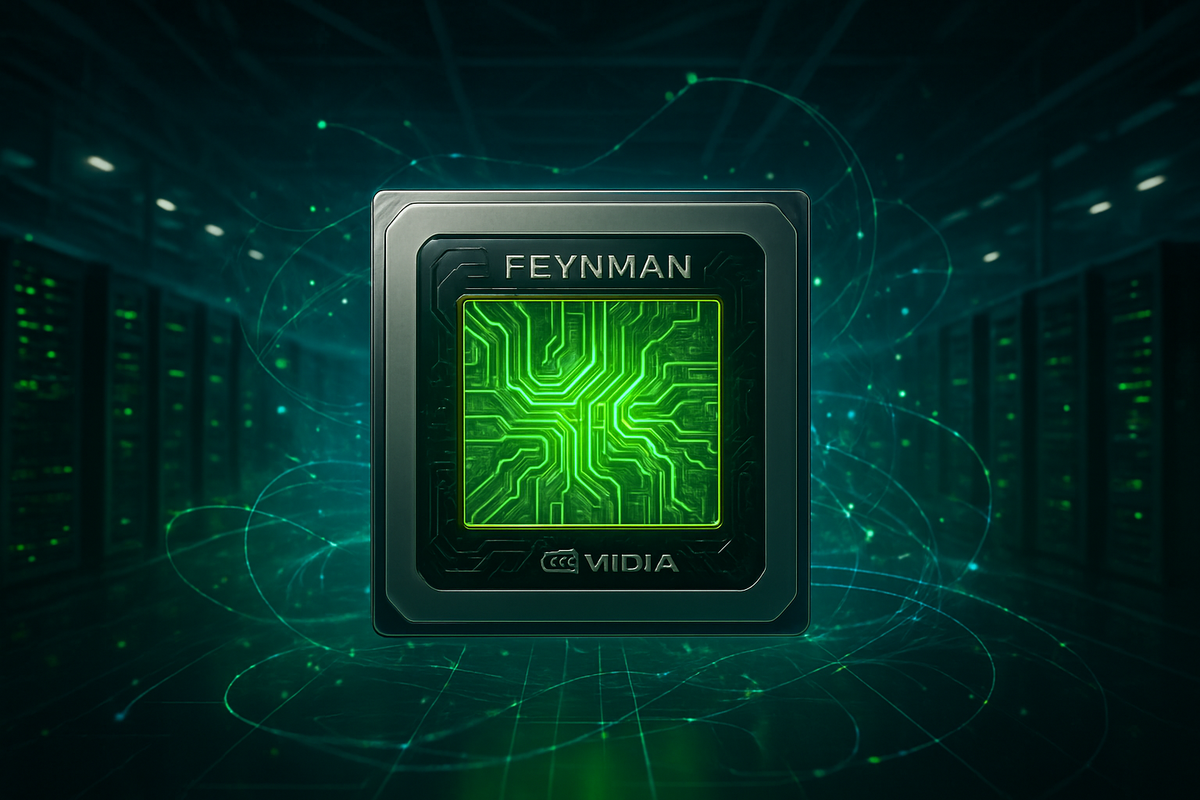
The technical "star" of the show, however, is the Feynman AI chip platform. Scheduled for high-volume production by 2027-2028, Feynman represents NVIDIA's leap into the "Angstrom Era" of computing. Built on the TSMC (NYSE: TSM) A16 process, the architecture is rumored to be the first in NVIDIA's lineup to replace traditional copper interconnects with silicon photonics, using light to transmit data between chips. This leap is intended to solve the "power wall" that has plagued data center scaling, potentially offering a 14-fold performance increase over current Blackwell systems while maintaining a manageable energy footprint.
Beyond the silicon, GTC 2026 is doubling down on "Physical AI" and robotics. The SAP Center floor is expected to feature live demonstrations of the GR00T 2.0 initiative, showcasing humanoid robots trained entirely within the NVIDIA Omniverse. A rumored collaboration with Disney (NYSE: DIS) is expected to show how simulation-to-reality (Sim2Real) technology has advanced to the point where robots can now handle unpredictable real-world environments with the grace of a human, opening up a multibillion-dollar market for autonomous labor.
The Market Scoreboard: Winners and Losers
As the Feynman architecture moves toward reality, several key players in the supply chain are positioned for massive gains. TSMC remains the most vital partner, serving as the exclusive manufacturer for the 1.6nm node required for Feynman. Similarly, ASML Holding (NASDAQ: ASML) is seeing renewed investor interest as its High-NA EUV (Extreme Ultraviolet) lithography machines become the mandatory gatekeepers for this next generation of chips. Perhaps the most surprising winner of the 2026 cycle is Micron Technology (NASDAQ: MU), which has seen its stock price soar as the industry grapples with a persistent shortage of HBM4 memory—a core component of the Feynman architecture that delivers 1.5 terabytes per second of bandwidth.
On the competitive front, the landscape is becoming more crowded. Advanced Micro Devices (NASDAQ: AMD) has successfully positioned its Instinct MI400 series as a legitimate alternative for hyperscalers like Meta Platforms (NASDAQ: META) and OpenAI, who are eager to diversify their hardware stacks. AMD’s focus on open-source standards has allowed it to capture a significant "non-NVIDIA" segment of the market, particularly among firms wary of vendor lock-in. Meanwhile, Intel Corporation (NASDAQ: INTC) is attempting a complex dual-role: competing with its own "Jaguar Shores" inference chips while simultaneously acting as a foundry partner for NVIDIA, manufacturing certain I/O components using its Intel 18A process to help mitigate TSMC’s capacity constraints.
The shift toward "Agentic AI" has also created new niche winners. Companies specializing in optical connectivity, such as Lumentum Holdings (NASDAQ: LITE) and Coherent Corp. (NYSE: COHR), have seen intense trading activity following NVIDIA’s recent multibillion-dollar investments in photonics technology. Conversely, older "legacy" AI infrastructure plays that failed to pivot to high-efficiency inference or liquid-cooling solutions are finding themselves marginalized as the "Vera Rubin" and "Feynman" systems demand increasingly specialized data center environments.
The Global Significance: Sovereign AI and Energy
The rollout of Feynman and Rubin is happening against a backdrop of a massive geopolitical trend: Sovereign AI. In 2026, nations are no longer content to rely on centralized US-based cloud providers. Instead, countries in the European Union, the Middle East, and Asia are investing over $100 billion annually into domestic "AI Factories." This trend has fundamentally changed NVIDIA’s business model, as it now sells directly to national governments seeking to ensure data residency and national security. The Feynman architecture, with its focus on "sovereign-grade" security features, is tailor-made for this new market reality.
Furthermore, the energy implications of GTC 2026 cannot be overstated. As AI clusters scale toward gigawatt-level consumption, the efficiency gains promised by Feynman’s silicon photonics and the A16 process are a matter of global energy policy. The market is increasingly weighing a company’s AI capability against its power efficiency; NVIDIA’s ability to deliver "more intelligence per watt" is becoming its most significant competitive moat. This has also fueled a "Supercycle" for infrastructure partners like Super Micro Computer (NASDAQ: SMCI), which has become the primary integrator for the highly efficient, liquid-cooled racks required to house these new-gen chips.
Historically, this era of AI reflects the "Broadband Moment" of the early 2000s—a transition from basic connectivity to the high-speed infrastructure that enabled the modern internet. Just as fiber optics changed the web, Feynman’s photonics and "Agentic" software frameworks are expected to transform AI from a tool humans "use" into a layer of autonomous intelligence that runs the global economy.
The Road Ahead: What Comes After Feynman?
In the short term, the market will be laser-focused on the yield rates of TSMC’s A16 node and the rollout schedule for the Rubin Ultra platforms. If NVIDIA can meet its aggressive 2027 delivery targets for Feynman, it will likely maintain its near-monopoly on the high-end training and inference market. However, any delays in ASML’s High-NA EUV delivery or TSMC’s backside power delivery systems could create a massive opening for AMD or the emerging class of custom silicon (ASIC) developers at Google and Amazon.
Strategically, NVIDIA is pivoting from being a hardware vendor to a platform operator. The introduction of OpenClaw and the expansion of the Omniverse suggests that Huang’s long-term goal is to own the "operating system of AI." This transition will require NVIDIA to navigate increasing regulatory scrutiny, particularly in the US and EU, regarding its influence over the foundational models and the hardware they run on. Investors should watch for potential antitrust discussions as NVIDIA’s footprint expands from data centers into robotics and national infrastructure.
Closing Thoughts for Investors
The kickoff of GTC 2026 confirms that the AI revolution is far from over; it is merely entering its second act. The transition from the "Generative Era" to the "Agentic and Physical Era" represents a total addressable market expansion that few predicted even two years ago. Key takeaways include NVIDIA’s relentless pursuit of manufacturing excellence through the Feynman architecture and the rising importance of "Sovereign AI" as a revenue driver.
Moving forward, the market will likely reward those who control the "Inference Stack"—the combination of efficient chips, optical interconnects, and autonomous software agents. While NVIDIA remains the clear leader, the success of supply chain partners like Micron and the resurgence of AMD as a viable #2 choice suggest a more mature, yet still hyper-growth, ecosystem. Investors should keep a close eye on inference cost-per-token metrics and the first real-world deployments of Feynman-class silicon in the coming months, as these will be the ultimate arbiters of value in the age of the "AI Factory."
This content is intended for informational purposes only and is not financial advice.