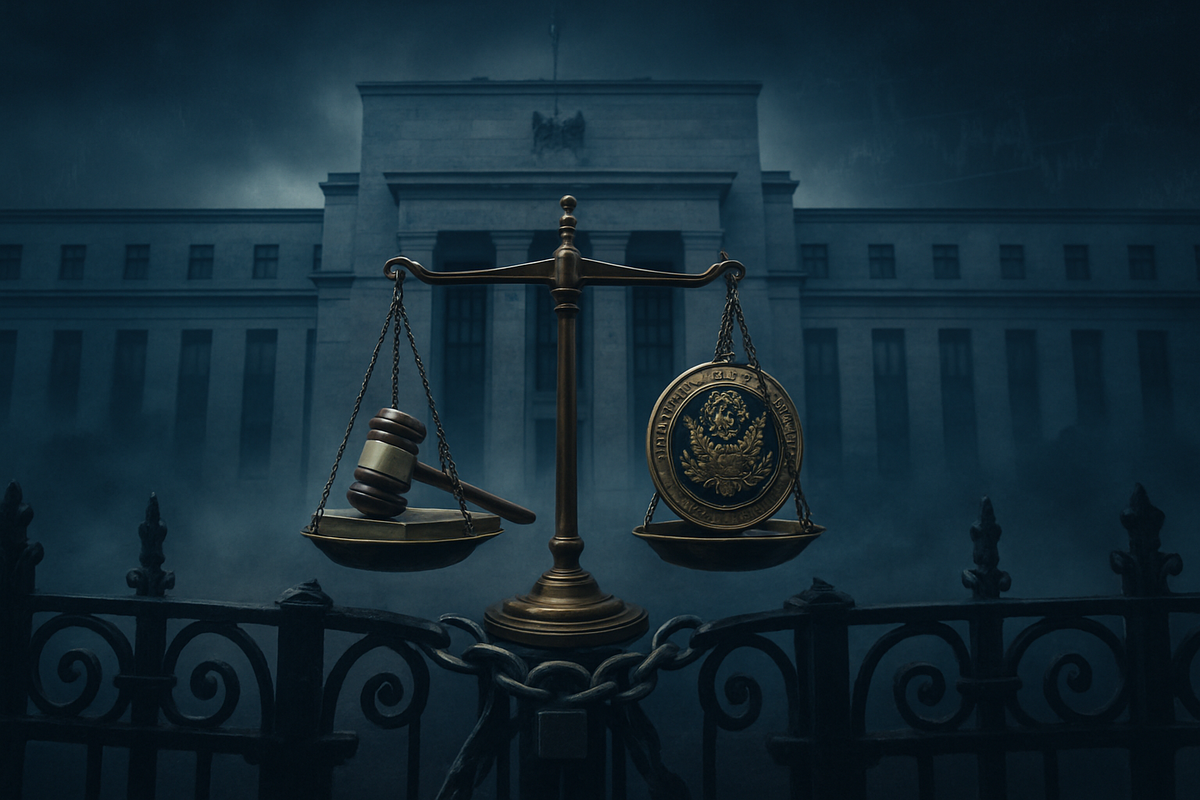
WASHINGTON D.C. — The high-stakes battle over the leadership of the world’s most powerful central bank has reached a fever pitch. As of March 16, 2026, the nomination of Kevin Warsh to succeed Jerome Powell as Chair of the Federal Reserve remains paralyzed in the Senate. This legislative gridlock follows a landmark federal court ruling that has fundamentally challenged the executive branch's authority over the central bank, leaving investors and policymakers in a state of high-stakes uncertainty regarding the future of U.S. monetary policy.
The standoff intensified on March 13, when Chief Judge James Boasberg of the U.S. District Court for the District of Columbia quashed grand jury subpoenas issued by the Department of Justice (DOJ) against current Fed Chair Jerome Powell. In a scathing 45-page opinion, Judge Boasberg labeled the DOJ’s criminal investigation into "renovation cost overruns" at the Fed's headquarters as a "pretext" and "harassment" intended to coerce the Fed into aggressive interest rate cuts. This legal victory for Fed independence has emboldened a bipartisan group of senators to block Kevin Warsh’s path to confirmation until the executive branch ceases its pressure campaign against the sitting leadership.
The "Tillis Blockade" and the Shadow of Executive Overreach
The nomination process for Kevin Warsh, which began with a formal White House announcement on January 30, 2026, hit a decisive wall on March 4 when it reached the Senate Banking Committee. The primary obstacle is not Warsh’s hawkish reputation, but rather a "procedural firewall" erected by Senator Thom Tillis (R-N.C.). Tillis has joined Senate Democrats, including Elizabeth Warren, in a rare alliance to halt all Federal Reserve confirmations until the DOJ’s appeal of Judge Boasberg’s ruling is resolved. The senators argue that confirming a new chair while the current chair is under "politicized" criminal investigation would set a dangerous precedent for the institution’s autonomy.
The timeline of this crisis began in late 2025, when the administration first signaled its intent to replace Powell before the May 15, 2026, expiration of his term as Chair. This was followed by the Department of Justice launching a probe into a $2.5 billion renovation project at the Eccles Building. When the Fed refused to comply with broad data requests, the DOJ issued grand jury subpoenas, leading to the legal showdown that Judge Boasberg recently adjudicated. Parallel to this, the Supreme Court is currently weighing Trump v. Cook, a case involving Fed Governor Lisa Cook that will determine if the President possesses the "at-will" authority to fire Fed officials—a power currently restricted by "for cause" protections in the Federal Reserve Act.
Further complicating Warsh’s path are newfound hurdles regarding his personal finances. As of March 16, a complex conflict-of-interest audit involving his ties to the family of The Estée Lauder Companies Inc. (NYSE: EL)—through his wife, Jane Lauder—has delayed his scheduled hearing. Senate staffers indicate that the sheer volume of assets and potential board overlaps require a level of scrutiny that could take weeks, if not months, to resolve, effectively running out the clock on a pre-May transition.
Markets in Limbo: Winners, Losers, and the "Warsh Shock" Reversal
The immediate reaction to the nomination "stall" has been a volatile unwinding of the so-called "Warsh Shock." When Warsh was first tapped in January, markets priced in a more aggressive, hawkish stance on inflation, sending yields on the 10-year Treasury higher. However, the current legal deadlock has reintroduced a "Powell Premium," as traders now expect Jerome Powell to remain at the helm well past May, likely continuing his "higher for longer" but more predictable path.
Large financial institutions such as JPMorgan Chase & Co. (NYSE: JPM), Goldman Sachs Group Inc. (NYSE: GS), and Bank of America Corp. (NYSE: BAC) are currently navigating a "wait-and-see" environment. While these banks typically benefit from the higher net interest margins associated with a hawkish Fed, the current uncertainty is dampening loan growth and complicating capital planning. Analysts at Goldman Sachs noted this morning that "the lack of clarity on who will be setting the discount rate in June is creating a risk-off sentiment in the interbank lending market."
Conversely, interest-sensitive sectors that had feared a Warsh-led Fed are seeing a temporary reprieve. Real estate investment trusts (REITs) like American Tower Corp. (NYSE: AMT) and capital-intensive utility giants like NextEra Energy (NYSE: NEE) have seen modest gains over the last 48 hours. These companies are particularly sensitive to the cost of debt, and the possibility of a delayed Warsh era—or a court-ordered Powell extension—suggests that the "shock" of rapid, hawkish policy shifts may be avoided in the short term.
A Constitutional Crisis for Central Banking
The wider significance of this event cannot be overstated; it represents the most significant challenge to the Federal Reserve’s independence since the 1930s. The Boasberg ruling has effectively drawn a line in the sand, suggesting that the judiciary will not allow the executive branch to use the DOJ as a tool for monetary policy leverage. This fits into a broader trend of "institutional stress testing" where traditional norms—like the hands-off approach to the Fed—are being replaced by aggressive legal and political maneuvering.
The historical precedent most frequently cited by scholars today is the 1980s friction between Paul Volcker and the Reagan administration. However, the 2026 crisis is unique because it involves the "judicialization" of monetary policy. If the Supreme Court rules in Trump v. Cook that the President can fire Fed governors at will, the very foundation of the Federal Reserve Act of 1913 could be dismantled. This would move the U.S. closer to a model where the central bank is a functional arm of the Treasury, a shift that historically leads to higher long-term inflation expectations and a weaker dollar.
Furthermore, the "Tillis Blockade" highlights a growing schism within the Republican party itself. While some members favor a radical overhaul of the Fed to ensure it is more "accountable" to the President, others fear that destroying the Fed's independence would lead to a collapse in global confidence in the U.S. dollar as the world's reserve currency. The outcome of this nomination will serve as a bellwether for whether the U.S. maintains its technocratic approach to inflation or shifts toward a more populist, politically-driven monetary regime.
What Comes Next: The May 15 Deadline
As the clock ticks toward May 15, several scenarios are emerging. In the most likely short-term outcome, the Senate Banking Committee remains frozen, and Jerome Powell enters a "holdover" period. Under the Federal Reserve Act, a Chair can continue to serve in an acting capacity until a successor is confirmed, or they can remain a member of the Board of Governors (where Powell’s term runs until 2028) and continue to lead the Federal Open Market Committee (FOMC).
The "X-factor" remains the Supreme Court’s decision in Trump v. Cook, expected by June. A ruling in favor of the administration would likely result in the immediate firing of both Powell and Cook, potentially leading to a constitutional crisis if the Fed refuses to recognize the removals without "cause." Strategic pivots for investors now involve hedging against "tail risks"—specifically the risk of a leaderless Fed during a potential summer inflation spike. We may see a flight to hard assets and gold if the institutional integrity of the Fed continues to be questioned in the courts.
Summary for Investors
The stalling of Kevin Warsh’s nomination is far more than a personnel delay; it is a symptom of a deep institutional fracture. The Boasberg ruling has protected the Fed for now, but the DOJ’s appeal ensures that the cloud of legal uncertainty will hang over the central bank for the foreseeable future. Markets are currently caught between the "hawkish reform" promised by Warsh and the "institutional stability" represented by the embattled Jerome Powell.
Moving forward, the market will remain sensitive to every procedural update from the Senate Banking Committee and every legal filing in the DOJ appeal. Investors should watch for the Supreme Court's June ruling as the ultimate decider of market direction. Until then, expect continued volatility in Treasury yields and a defensive posture from major financial institutions as the U.S. grapples with the potential end of the independent central bank as we know it.
This content is intended for informational purposes only and is not financial advice.