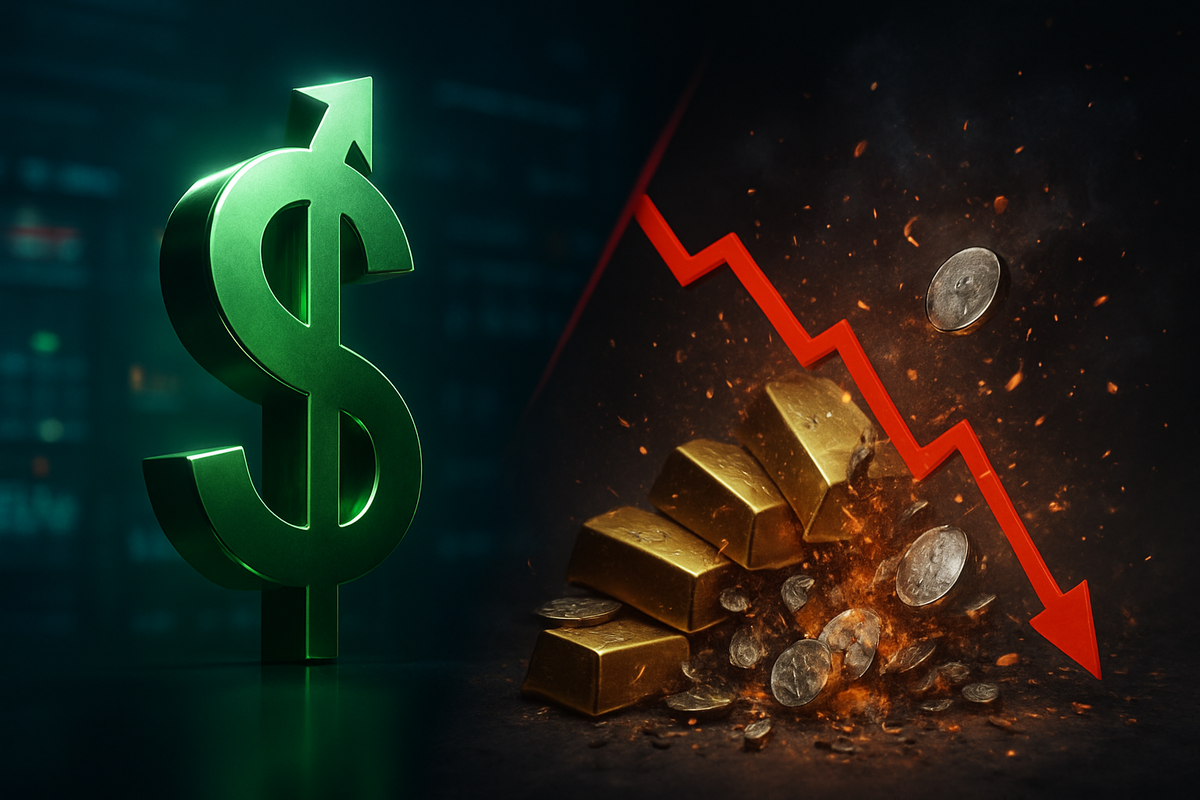
The global financial landscape underwent a seismic shift in the first week of February 2026, as the nomination of Kevin Warsh to succeed Jerome Powell as Chairman of the Federal Reserve sent shockwaves through the commodities and currency markets. The announcement, made by the White House on January 30 and reverberating through the opening days of February, acted as a violent catalyst for the U.S. Dollar, which surged to multi-year highs. Simultaneously, the nomination triggered what traders are now calling the "Great Metal Flush"—a massive flash crash in gold and silver that erased trillions in paper wealth in a matter of hours.
As of February 6, 2026, the "Warsh Shock" has fundamentally recalibrated investor expectations for the next four years of American monetary policy. While the era of Jerome Powell was defined by "data-dependency" and a cautious approach to inflation, the market is pricing in a return to a more aggressive, forward-looking hawkishness under Warsh. This transition has led to an immediate exodus from traditional inflation hedges and a frantic repositioning within the energy and banking sectors, signaling a potential end to the "debasement trade" that dominated the early 2020s.
The 'Great Metal Flush' and the Dollar's Resurgence
The market reaction to the Warsh nomination was swift and unforgiving. By February 2, silver had experienced its most violent single-day collapse since the 1980 "Silver Thursday," plummeting more than 30% from its January peak of $121.64 down to the $75.00 range. The volatility was so extreme that CME Group Inc. (CME:NASDAQ) was forced to raise margin requirements on silver futures by 15% mid-session to stem the bleeding, a move that inadvertently accelerated the crash as leveraged traders were forced into immediate liquidations. Gold followed suit, suffering its worst daily percentage drop in decades, sliding from roughly $5,600 to below the psychologically critical $5,000 support level, currently trading near $4,465.
The primary driver of this commodities carnage was the dramatic rally in the U.S. Dollar Index (DXY). Investors, sensing a Fed Chair who would prioritize price stability and a lean balance sheet, flocked to the greenback as the "safest" yield play. Because precious metals are priced globally in dollars, the surging currency created a liquidity vacuum that sucked the oxygen out of the gold and silver markets. This "six-sigma" event caught many institutional "perma-bulls" off guard, particularly those who had bet on continued dovishness as the AI-driven productivity boom began to take hold.
The timeline leading to this moment began in late 2025, when rumors of Powell’s replacement began to swirl. While some expected a candidate who would facilitate lower rates to support federal deficit spending, the selection of Warsh—a former Fed Governor known for his 2010 dissent against Quantitative Easing (QE2)—signaled a pivot toward "monetary normalization." By the time the nomination hit the wires in early February, the market’s "hawkish" realization was instantaneous, resulting in a decoupling of assets that had historically moved in tandem.
Winners and Losers in the New Policy Paradigm
The sudden repricing of risk has created a stark divide between winning and losing equities. Among the primary casualties are the major mining firms, which saw their market capitalizations decimated alongside the underlying spot prices of the metals they produce. Newmont Corporation (NEM:NYSE), the world’s largest gold miner, saw its shares tumble as the floor fell out from under gold prices. Similarly, Pan American Silver Corp. (PAAS:NASDAQ) faced intense selling pressure, with its valuation hit by the double-whammy of the silver crash and the increased cost of capital implied by a more hawkish Fed.
On the winning side of the ledger, the energy sector has shown surprising resilience. Exxon Mobil Corporation (XOM:NYSE) and other major oil producers have actually seen their shares rise since the announcement, gaining roughly 4.2% in the first week of February. Investors are betting that Warsh’s "supply-side" leanings—which favor deregulation and infrastructure investment—will provide a more stable environment for traditional energy. Furthermore, the banking sector, led by giants like JPMorgan Chase & Co. (JPM:NYSE), has benefited from the prospect of a steeper yield curve and higher-for-longer interest rates, which typically boosts net interest margins.
The divergence is clear: companies tethered to the "inflation hedge" narrative are in retreat, while those positioned to benefit from a stronger dollar and a productivity-focused economy are seeing renewed inflows. This repositioning suggests that the market believes Warsh will successfully manage a transition away from a crisis-era monetary stance toward one that emphasizes economic efficiency over liquidity injections.
Analyzing the Significance: A Return to Volckerism?
The nomination of Kevin Warsh represents more than just a change in leadership; it marks a potential end to the "Fed Put" that has backstopped markets for nearly two decades. Analysts are drawing historical parallels to the era of Paul Volcker, suggesting that Warsh may be tasked with the "final cleansing" of inflationary expectations. By signaling a willingness to let markets find their own equilibrium without constant intervention, Warsh is challenging the prevailing "buy everything" sentiment that has characterized the post-2020 market.
This shift fits into a broader industry trend where central banks are moving away from universal liquidity support toward more targeted, productivity-enhancing strategies. Warsh has been a vocal proponent of the "AI-driven disinflation" thesis, arguing that the technological revolution will lower costs naturally, allowing the Fed to maintain a tighter monetary stance without triggering a recession. However, the "metals flash crash" highlights the danger of this transition: by removing the "debasement" floor, the Fed risks triggering massive deleveraging events in assets that were used as proxies for dollar weakness.
The regulatory implications are also significant. A Warsh-led Fed is expected to be more critical of the central bank's bloated balance sheet. This could mean a more aggressive pace of Quantitative Tightening (QT), which would keep upward pressure on real yields and downward pressure on non-yielding assets like gold. For partners and competitors in the global market, this "King Dollar" regime forces other central banks, such as the ECB and BoJ, into a difficult position as they attempt to manage their own currency depreciations against a resurgent U.S. dollar.
The Road Ahead: Confirmation and Constraints
While the market has reacted as if Warsh is already in the Chairman’s seat, the path forward is fraught with political and structural hurdles. Short-term, the nomination must pass through a contentious Senate confirmation process. Figures like Senator Thom Tillis have already signaled that they may withhold support for any Fed nominations until broader investigations into the central bank’s recent conduct are concluded. This creates a period of "liminal uncertainty" where the market may experience secondary tremors if the confirmation appears to stall.
Furthermore, a unique "dual-power" dynamic is set to emerge at the Eccles Building. Jerome Powell’s term as Chair ends in May 2026, but he retains his seat on the Board of Governors until 2028. If Warsh is confirmed, he will have to lead a board that still includes his predecessor, potentially leading to internal friction over the pace of balance sheet reduction. Investors should watch for "strategic pivots" from mining companies, which may seek to diversify into industrial metals like copper or lithium—assets that are less tied to the "monetary hedge" narrative and more to the "productivity boom" Warsh champions.
Long-term, the primary challenge for a Warsh Fed will be managing the "landing" of the U.S. economy. If the dollar becomes too strong, it could hurt American exports and cause sovereign debt crises in emerging markets. Conversely, if he fails to be as hawkish as the market now expects, the "rebound" in commodities could be just as violent as the crash. The coming months will be a test of whether the "Warsh Shock" was a one-time correction or the beginning of a sustained bear market for inflation-sensitive assets.
A New Chapter for the Global Reserve Currency
The events of early February 2026 have made one thing clear: the era of "easy money" and predictable Fed support is over. The nomination of Kevin Warsh has effectively "burst" the gold and silver bubble, reasserting the dominance of the U.S. Dollar in the global hierarchy. For investors, the takeaway is a return to fundamentals. The "debasement trade" is being replaced by a "productivity trade," where the value of an asset is determined by its yield and industrial utility rather than its status as a hedge against central bank incompetence.
Moving forward, the market will likely remain in a state of high sensitivity to any communication from the nominee. The "Warsh Shock" has reset the playing field, and while the initial pain in the metals market was severe, it has cleared the way for a more "normalized" financial environment. Investors should keep a close eye on Senate confirmation hearings and the upcoming March FOMC meeting for any signs of how Warsh intends to coordinate with a still-seated Jerome Powell.
Ultimately, the significance of this moment lies in the restoration of the dollar's "scarcity value." If Warsh follows through on his hawkish reputation, the commodities markets may be entering a prolonged period of consolidation, while the U.S. equity markets shift their focus from liquidity to earnings growth. The "Great Metal Flush" was not just a flash crash; it was a loud, clear signal that a new regime has arrived at the Federal Reserve.
This content is intended for informational purposes only and is not financial advice.