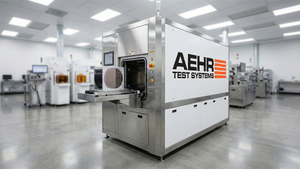
As of February 16, 2026, the American industrial landscape is undergoing a profound transformation, driven by a powerful synergy between fiscal policy and monetary easing. The legislative centerpiece of this shift, the "One Big Beautiful Bill" Act (OBBBA)—officially known as H.R. 1, Public Law 119-21—is now fully operational, fundamentally altering the tax landscape for capital-intensive firms. By restoring the ability of businesses to deduct interest expenses based on EBITDA (Earnings Before Interest, Taxes, Depreciation, and Amortization) rather than the more restrictive EBIT (Earnings Before Interest and Taxes) standard, the bill has effectively "unlocked" billions of dollars in trapped liquidity for mid and small-cap manufacturing and industrial firms.
This fiscal tailwind is converging with a series of late-2025 interest rate cuts from the Federal Reserve, which has brought the federal funds rate down to a range of 3.50% – 3.75%. For the "Real Economy"—the domestic manufacturers, infrastructure builders, and electronics fabricators that rely heavily on debt-financed machinery and facilities—this "double engine" of lower nominal rates and enhanced tax deductibility has significantly reduced the after-tax cost of capital. Market analysts suggest that for some highly leveraged industrial players, the effective cost of debt has dropped by as much as 20% in the last six months alone, prompting a surge in domestic capital expenditure (CapEx) that many had sidelined during the high-inflation era of 2023-2024.
The Great EBITDA Pivot: Restoring the Incentive to Invest
The path to the OBBBA began in the wake of the 2024 elections, culminating in the bill’s signing on July 4, 2025. The legislation was designed to correct what proponents called the "investment penalty" embedded in the 2017 Tax Cuts and Jobs Act (TCJA). Starting in 2022, the TCJA had tightened Section 163(j) of the tax code, limiting interest deductions to 30% of EBIT. This change disproportionately hurt manufacturers because it excluded depreciation and amortization from the calculation. Under the OBBBA, as of the 2025 tax year, the "D&A" add-back has returned, allowing companies with massive physical footprints to shield more of their income from taxes.
Key stakeholders, including the National Association of Manufacturers and various regional industrial coalitions, lobbied heavily for this change, arguing that the EBIT-based limit punished companies for building factories and buying equipment. The OBBBA didn't stop at the EBITDA restoration; it also permanently reinstated 100% bonus depreciation for equipment acquired after January 19, 2025. This allows firms to expense the full cost of new machinery immediately, a move that has been met with broad enthusiasm across the Rust Belt and Southern manufacturing corridors. Initial market reactions in late 2025 saw the Russell 2000 Index outperforming the S&P 500 as investors rotated into "old economy" stocks that stood to benefit most from the new tax regime.
Manufacturing and Infrastructure: The New Market Leaders
The restoration of EBITDA-based deductions has created a clear tier of winners, particularly among mid-cap firms with heavy depreciation schedules. One of the most notable beneficiaries is Lumen Technologies (NYSE: LUMN). As a telecommunications and infrastructure provider with a massive fiber-optic network, Lumen's high debt load and substantial annual depreciation previously limited its interest deductions under the EBIT standard. With the OBBBA's pivot, Lumen’s liquidity profile has improved dramatically, allowing it to accelerate its fiber-to-the-home (FTTH) expansion.
Similarly, Donaldson Company (NYSE: DCI), a manufacturer of advanced filtration systems, and TTM Technologies (NASDAQ: TTMI), a global leader in printed circuit board (PCB) fabrication, have seen their balance sheets bolstered. TTM Technologies, in particular, is leveraging the 100% bonus depreciation to upgrade its North American facilities to meet the rising demand for AI-driven hardware components. Other major winners include infrastructure giant MasTec (NYSE: MTZ) and engineering firm Fluor Corporation (NYSE: FLR). Both companies operate in sectors where long-term, debt-financed projects are the norm. The combination of lower Fed rates and the EBITDA-based tax shield makes their massive project backlogs significantly more profitable. Even larger-cap firms with mid-cap sensibilities, such as Johnson Controls (NYSE: JCI) and Celestica Inc. (NYSE: CLS), are seeing increased demand as their customers—now flush with tax-advantaged capital—invest in smart building infrastructure and data center cooling solutions.
A Structural Shift: Rebalancing the "Real Economy"
The OBBBA represents a significant departure from the tech-heavy growth models that dominated the 2010s. By prioritizing interest deductibility for firms with physical assets, the bill is effectively shifting the market’s center of gravity toward the "Real Economy." Historically, such a shift mirrors the post-WWII industrial boom, where tax policy was explicitly used to incentivize domestic production. The ripple effects are already being felt among competitors; firms that previously moved manufacturing offshore to reduce capital intensity are now reconsidering domestic "near-shoring" to take advantage of the OBBBA’s generous depreciation rules and interest shields.
Furthermore, this policy shift serves as a regulatory "moat" for capital-intensive incumbents against digital-first disruptors. While software companies often have high margins, they lack the massive depreciation add-backs that now provide industrials with a competitive tax advantage. From a broader industry trend perspective, we are seeing a move away from "asset-light" strategies. Investors are beginning to value the "hard assets" on a company's balance sheet not just for their production capacity, but for their utility as a tax-shielding mechanism. This is a complete reversal of the market sentiment seen during the 2022-2023 rate hike cycle, where debt was viewed almost exclusively as a liability.
The Road Ahead: Navigating the 2026 Monetary Landscape
Looking forward, the remainder of 2026 presents both opportunities and strategic challenges. While the Fed has paused its rate cuts at 3.50% – 3.75% to monitor the inflationary impact of the OBBBA’s $285 billion stimulus, market participants are bracing for the conclusion of Jerome Powell’s term as Fed Chair in May 2026. The appointment of a successor will be a critical pivot point for the markets. If the new Chair continues the easing cycle toward a terminal rate of 3.0%, the industrial sector could see a prolonged multi-year bull run. However, if the fiscal stimulus of the OBBBA triggers a resurgence in inflation, the Fed may be forced to reverse course, which would test the resilience of the new tax-advantaged industrial models.
In the short term, companies like MasTec (NYSE: MTZ) and Fluor Corporation (NYSE: FLR) will likely focus on aggressive debt refinancing to lock in the lower rates of late 2025. Strategically, mid-cap manufacturers are expected to pivot toward "systemic CapEx"—investing in automation and robotics that qualify for 100% bonus depreciation while simultaneously lowering long-term labor costs. The challenge will be managing the increased leverage that the OBBBA encourages; while the tax shield makes debt cheaper, the principal must still be repaid, and a sudden economic downturn could still strain companies that over-extend during this "goldilocks" period of policy support.
Conclusion: A New Era for Capital-Intensive Growth
The "One Big Beautiful Bill" Act has fundamentally rewritten the rules of engagement for US industrial and manufacturing firms. By aligning the tax code with the realities of capital-intensive business—specifically through the restoration of EBITDA-based interest deductibility—the legislation has removed a significant barrier to domestic investment. When paired with the Federal Reserve’s shift toward a more accommodative monetary policy, the result is a potent environment for mid and small-cap firms that were previously marginalized by high interest rates and restrictive tax rules.
For investors, the key takeaways are clear: the "Real Economy" is back in favor. The "double engine" of OBBBA and Fed easing has created a unique window of opportunity for firms like Lumen Technologies (NYSE: LUMN), TTM Technologies (NASDAQ: TTMI), and Donaldson Company (NYSE: DCI) to expand their margins and capture market share. Moving forward, the market will be watching the transition of Fed leadership and the quarterly CapEx reports of industrial firms to see if this "One Big Beautiful" legislative experiment delivers the long-term manufacturing renaissance it promises.
This content is intended for informational purposes only and is not financial advice.