As of mid-February 2026, the cattle futures market finds itself in a precarious tug-of-war, characterized by a persistent technical "chop" that has left traders searching for a definitive direction. While the underlying fundamentals—including the tightest cattle supply in seven decades—point toward a bullish horizon, the charts tell a story of hesitation. To sustain a long-term uptrend, the market must decisively reclaim key technical resistance levels, most notably the 200-day moving average and the previous week's highs, which have recently acted as a ceiling for price action.
This period of consolidation comes at a time of record-setting beef demand, despite all-time high retail prices. According to recent data from CattleFax, the industry is navigating a "perfect storm" where shrinking herd sizes meet a consumer base that remains fiercely loyal to premium protein. However, the immediate market movement remains tethered to technical triggers and weather-related uncertainties, as the transition from a lingering La Niña to a projected El Niño later this year threatens to reshuffle the deck for forage and feed costs.
Technical Resistance and the Battle for a Breakout
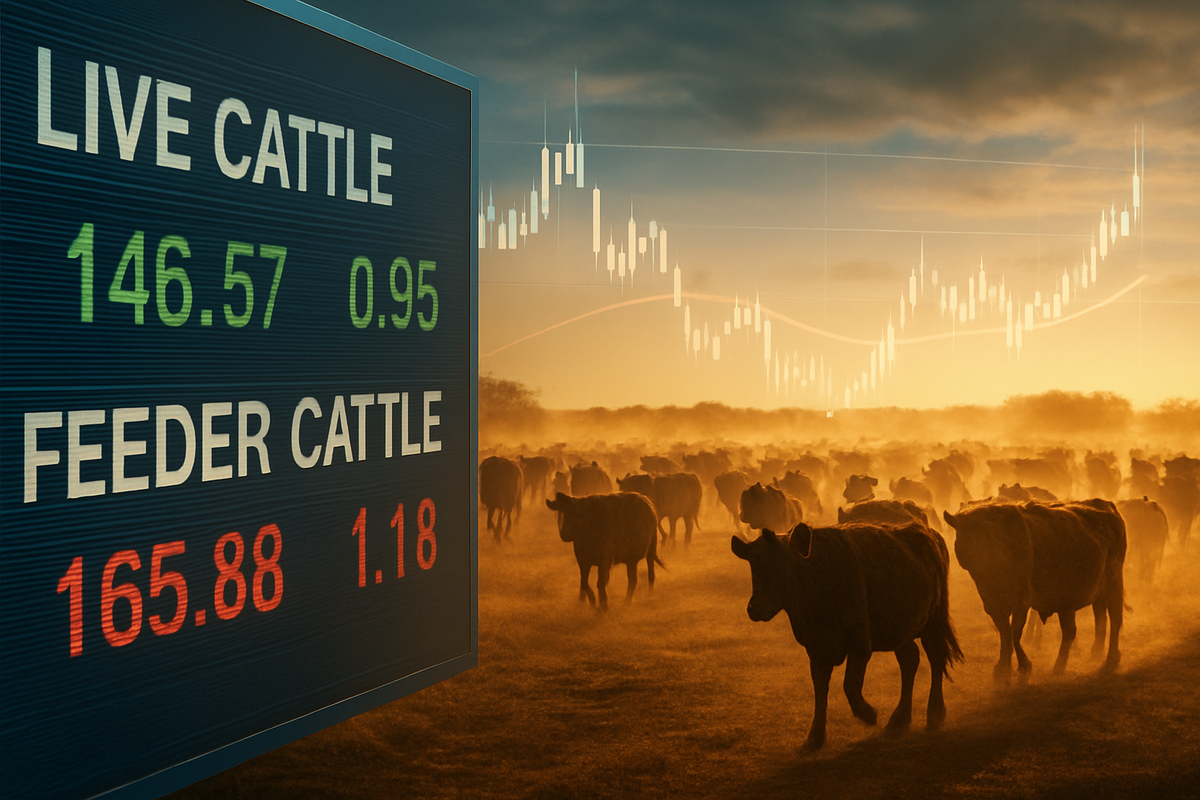
The live cattle futures market has spent the opening weeks of 2026 "chopping back and forth" within a tightening range. As of February 16, 2026, front-month contracts are trading near $243/cwt, a level that represents significant psychological and structural importance. Market analysts note that the 200-day moving average has become the primary "line in the sand" for the bulls. Currently, the market is oscillating around this mean, failing to find the momentum necessary to stay above it for consecutive sessions. Reclaiming this average is viewed as the essential prerequisite for a renewed charge toward the $250 level.
The timeline leading to this stalemate began in late 2025, when a brief rally was stifled by a surge in managed money profit-taking. Since then, the market has failed to clear "last week's highs" (approximately $248/cwt in the cash market), creating a series of lower highs on the daily charts. While cash trades in the North and South have remained robust, futures traders are demanding more "cash push" evidence before committing to new all-time highs. This divergence between strong cash markets and hesitant futures is the core of the current technical "chop."
Stakeholders, from independent ranchers to institutional hedgers, are closely watching the commitment of traders (COT) reports. Currently, managed money holds over 108,000 net long contracts, a heavy positioning that suggests the "easy money" has already been made. For a breakout to occur, the market likely needs a catalyst—either a further reduction in feedlot placements or a sharper-than-expected jump in packer bids—to force short-sellers out and entice new speculative capital.
Winners and Losers in a High-Price Environment
The current market dynamics have created a stark divide between different sectors of the protein complex. On the losing end are the major beef processors, such as Tyson Foods (NYSE: TSN) and JBS SA (OTC: JBSAY). These industry giants are currently caught in a "processor squeeze." With the price of live cattle at historic highs, their margins have collapsed; Tyson, for instance, is facing projected losses of up to $600 million in its beef segment for the fiscal year 2026. The scarcity of animals has forced these companies to reduce shifts or even close older facilities, such as Tyson's recent move in Lexington, Nebraska, to manage overcapacity.
Conversely, high-end and mid-market casual dining chains have shown surprising resilience. Texas Roadhouse (NASDAQ: TXRH) continues to outperform the broader market, as its core demographic remains willing to pay a premium for a consistent steakhouse experience. Similarly, Darden Restaurants (NYSE: DRI), the parent company of LongHorn Steakhouse, has utilized its scale to mitigate some inflationary pressures, though its luxury brands like Ruth’s Chris face more volatility as high-income discretionary spending fluctuates.
Other players to watch include Bloomin’ Brands (NASDAQ: BLMN), which operates Outback Steakhouse. Unlike Texas Roadhouse, Bloomin’ Brands has struggled with negative year-over-year revenue growth in its value-tier segments, as lower-income consumers begin to trade down or opt for "cheap protein" alternatives like chicken. Meanwhile, niche players like The ONE Group Hospitality (NASDAQ: STKS), focused on the high-end "vibe dining" segment, are finding success by catering to an affluent clientele that appears insulated from the current record-high beef prices.
Supply Constraints and the El Niño Wildcard
The broader significance of the current market volatility is rooted in the "tightest cattle supply in modern history." CattleFax reported at the early 2026 CattleCon that the U.S. beef cow herd has shrunk to approximately 86.2 million head—its smallest size since 1951. This contraction is the result of years of drought and high input costs, which have discouraged ranchers from retaining heifers for herd rebuilding. Even with prices at record levels, the expansion of the herd is expected to be "slow and measured," with significant growth not anticipated until 2027 or 2028.
Adding to the complexity is the shifting weather pattern. The industry is currently transitioning out of a La Niña phase, which historically brings dry conditions to the Southern Plains. While this phase is expected to end by March 2026, meteorologists are projecting a rapid transition to El Niño by the fall. For cattle producers, this is a double-edged sword. While El Niño often brings increased moisture to the West—improving forage and pasture conditions—it can lead to drought in the central Corn Belt, potentially spiking the price of corn, which has recently stabilized in the $4.00–$5.00/bu range.
This event mirrors the 2014-2015 cattle cycle but with a critical difference: beef demand is now at a 40-year high. Unlike previous cycles where high prices led to a "demand destruction" phase, the 2026 consumer has shown an unprecedented appetite for high-quality, Choice and Prime-graded beef. This shift in consumer behavior suggests that the floor for cattle prices may be significantly higher than in any previous market cycle, regardless of technical setbacks.
What Comes Next: Scenarios for the Spring
In the short term, the cattle futures market is likely to remain in its current trading range until a definitive break above the 200-day moving average occurs. If the market can reclaim last week's highs and hold them, technical analysts expect a "melt-up" scenario where prices quickly test the $260 level. However, if the "chop" persists and the market falls below the $235 support level, it could trigger a wave of liquidations from managed money, leading to a temporary but sharp correction.
For the public companies involved, strategic pivots are already underway. Packers like JBS are increasingly looking to their South American operations, where herds are larger and cattle are cheaper, to offset U.S. losses. For investors, the "steakhouse trade" remains a high-stakes bet on the health of the American consumer. As long as employment remains strong, the record demand for beef is likely to persist, but any sign of an economic slowdown could quickly turn the current record demand into a liability for over-leveraged restaurant groups.
The most critical factor to watch in the coming months will be heifer retention. If ranchers continue to send females to slaughter rather than keeping them for breeding, the supply of cattle will remain critically low for even longer than currently projected. This would provide a fundamental "backstop" for prices, effectively preventing any long-term technical breakdown from turning into a bear market.
Summary and Investor Outlook
The cattle futures market in early 2026 is a study in contradictions: record-breaking demand and historically low supply are being met with technical hesitation and a volatile "chop." The key takeaways for investors are the importance of the 200-day moving average as a trend indicator and the divergent fortunes of beef packers and steakhouse operators. While processors like Tyson Foods (TSN) are weathering a margin crisis, demand-side leaders like Texas Roadhouse (TXRH) are thriving.
Moving forward, the market’s ability to break out of its current range will depend on the "cash push" and the evolving weather narrative. Investors should keep a close eye on the transition to El Niño, as any threat to the corn crop could raise feed costs and disrupt the fragile profitability of the cattle industry. The lasting impact of this period will likely be a permanent recalibration of beef prices, as the industry moves away from the "cheap protein" era into a future defined by scarcity and premium quality.
As we move into the spring of 2026, the cattle market remains the premier theater for the battle between technical resistance and fundamental reality. Whether the "chop" resolves to the upside or triggers a correction, the underlying story remains the same: there simply aren't enough cows to meet the world’s appetite for beef.
This content is intended for informational purposes only and is not financial advice.