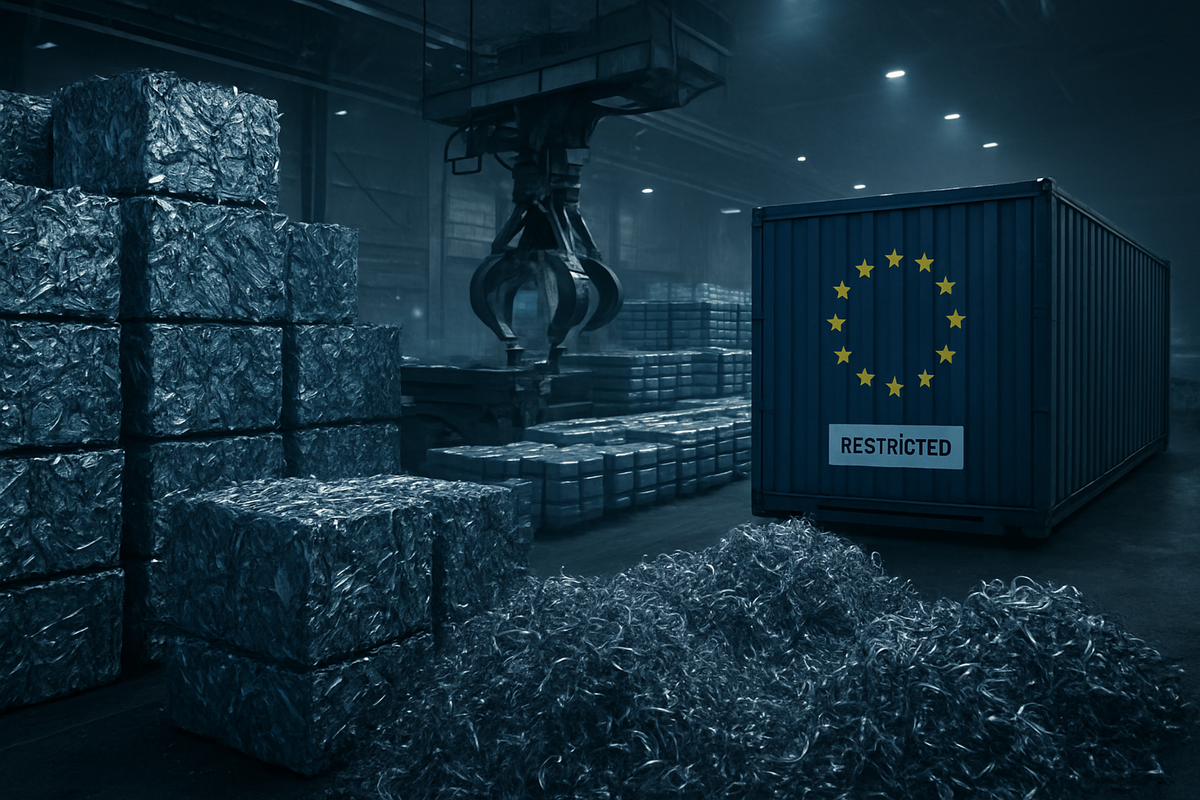
As of January 27, 2026, the European aluminum market has entered a period of intense volatility, with prices for aluminum scrap and secondary ingots surging to multi-year highs. This "supply-side squeeze" is being driven by a perfect storm of factors: a structural shortage of domestic scrap generation, an industrial downturn that has dried up fabrication offcuts, and the looming implementation of the European Union’s aggressive export restrictions on "strategic secondary raw materials," scheduled to take effect in the spring of 2026.
The immediate implications are stark for the continent’s manufacturing core. While primary aluminum prices on the London Metal Exchange have climbed toward $3,200 per tonne, the price of secondary aluminum pressure diecasting ingots has seen even more aggressive weekly gains, trading between €2,430 and €2,530 per tonne. For European smelters, the cost of high-grade scrap—now approaching €2,000 per tonne—is rising faster than the price of the finished ingots they produce. This margin compression is threatening the viability of smaller players even as the EU attempts to ringfence its resources for a greener industrial future.
Tightening the Loop: The Road to the Spring 2026 Restrictions
The current crisis is the culmination of a multi-year effort by Brussels to secure "strategic autonomy" in critical metals. Following the update to the EU Waste Shipment Regulation (WSR), Trade Commissioner Maroš Šefčovič confirmed in late 2025 that the EU would move to restrict the export of aluminum scrap to non-OECD countries starting in the spring of 2026. The measure, intended to prevent "scrap leakage" to markets with lower environmental standards, effectively imposes a licensing regime and potential tariffs of up to 30% on exports to major Asian and North African recycling hubs.
The timeline leading to this moment has been marked by increasing desperation within the European recycling sector. Throughout 2024 and 2025, the continent saw a significant manufacturing slowdown, particularly in the automotive and construction sectors, which are the primary "generators" of scrap. With fewer cars being manufactured and new building projects stalled by high interest rates, the inflow of "new scrap" and "old scrap" has plummeted. Industry estimates suggest that approximately 15% of the EU’s secondary smelting capacity is currently sitting idle due to a lack of feedstock.
Initial market reactions have been divided. While large-scale primary producers have lauded the move as essential for decarbonization, smaller traders and scrap yards are accused of "hoarding" inventory. Market analysts report that scrap holders are intentionally delaying sales to wait for the anticipated price spike that will occur once the export tap is officially tightened in the coming months. This speculative behavior has only exacerbated the immediate shortage, leaving downstream manufacturers in a precarious position.
Winners and Losers in the New Trade Order
The most prominent beneficiary of this regulatory shift is Norsk Hydro ASA (OSE: NHY). The Norwegian giant has been a vocal advocate for the export ban, viewing it as a prerequisite for its "Hydro CIRCAL" line of low-carbon products. By securing a captive supply of European scrap, Norsk Hydro is positioned to dominate the premium green aluminum market. The company’s new recycling plants in Spain and Hungary are reaching full capacity just as the restrictions take hold, allowing them to bypass the high energy costs associated with primary smelting.
Similarly, Hindalco Industries Ltd (NSE: HINDALCO), through its subsidiary Novelis, stands to gain significantly. As the world’s largest recycler of aluminum, Novelis has invested heavily in closed-loop systems with automotive partners. The upcoming restrictions ensure that the scrap generated by European car manufacturers stays within the Novelis ecosystem rather than being bid away by international competitors. However, the company faces the challenge of managing the high premiums currently demanded by scrap yards in this pre-restriction window.
Conversely, the "losers" are likely to be independent secondary smelters and downstream manufacturers like Constellium SE (NYSE: CSTM). While Constellium is a major player in aerospace and automotive packaging, its reliance on a steady, affordable supply of secondary metal makes it vulnerable to the current price surge. If scrap prices remain decoupled from global primary aluminum trends, these companies may see their margins eroded, forcing them to pass costs onto consumers or seek alternative, more carbon-intensive primary supplies that may be subject to the EU's Carbon Border Adjustment Mechanism (CBAM). Alcoa Corporation (NYSE: AA) also faces a complex landscape; while its primary production profits from higher global prices, its European footprint remains exposed to the continent’s erratic energy and feedstock costs.
Decarbonization and the Rise of Protectionist Metals Policy
The current volatility in the aluminum market fits into a much broader global trend toward "green protectionism." The EU’s move to restrict scrap exports is not merely a trade policy; it is an environmental one. By keeping aluminum scrap within its borders, the EU significantly reduces the energy required for metal production—recycling aluminum consumes only 5% of the energy needed for primary smelting. This event is a clear signal that the circular economy is no longer a theoretical goal but a mandated industrial reality.
This shift mirrors historical precedents, such as China’s 2018 "National Sword" policy, which upended global plastic and paper recycling markets. However, the stakes for aluminum are higher due to its role in the energy transition. The ripple effects are already being felt by competitors in the United States and India. As European scrap becomes harder to source, US manufacturers, already grappling with high tariffs on primary metal, may find themselves in a bidding war for North American scrap, further inflating global secondary prices.
The regulatory implications are also profound. The EU’s scrap policy is inextricably linked to the CBAM, which began its full implementation phase in early 2026. By making primary aluminum imports from high-carbon regions more expensive and simultaneously restricting the export of low-carbon scrap, the EU is effectively creating a "green premium" market. This could lead to a permanent bifurcation of the global aluminum market: a high-cost, low-carbon European zone and a lower-cost, high-carbon zone elsewhere.
The Road Ahead: Scrap Wars and Strategic Pivots
In the short term, the market should prepare for a "scrap war" as the Spring 2026 deadline approaches. We can expect to see a final flurry of exports as traders clear out stocks before the new licensing requirements begin. Once the restrictions are live, the focus will shift to domestic collection efficiency. Market opportunities may emerge for technology companies specializing in advanced sorting and sensor-based recycling, as the industry seeks to extract more value from lower-quality scrap streams to compensate for the overall volume shortage.
Long-term, the industry must undergo a strategic pivot. Companies that have not yet secured "closed-loop" agreements—where they buy back the scrap generated by their own customers—will find themselves at a severe competitive disadvantage. We may also see a wave of consolidation, as larger players like Rio Tinto Group (NYSE: RIO) or Norsk Hydro acquire smaller recycling firms to guarantee their feedstock pipelines. The primary risk remains the potential for "black market" leakage or the misclassification of scrap as finished goods to bypass export controls, requiring rigorous enforcement from EU customs authorities.
Navigating the New Aluminum Landscape
The tightening of the European aluminum market is a landmark event in the transition to a circular economy. The combination of low domestic scrap generation and the impending 2026 export restrictions has created a high-price environment that rewards those with integrated recycling capabilities while punishing those dependent on the open market. The key takeaway for the market is that "trash" has officially become a "strategic treasure," and the battle to control it will define the next decade of metals trading.
Moving forward, investors should closely watch the manufacturing PMI data from Germany and France; a recovery in industrial output would be the only natural "cure" for the scrap shortage by increasing the generation of new offcuts. Additionally, the specific details of the export licensing process, expected in March 2026, will determine just how "hard" this ban will be. For now, the aluminum market remains on edge, caught between the mandates of a green future and the harsh realities of a supply-constrained present.
This content is intended for informational purposes only and is not financial advice.