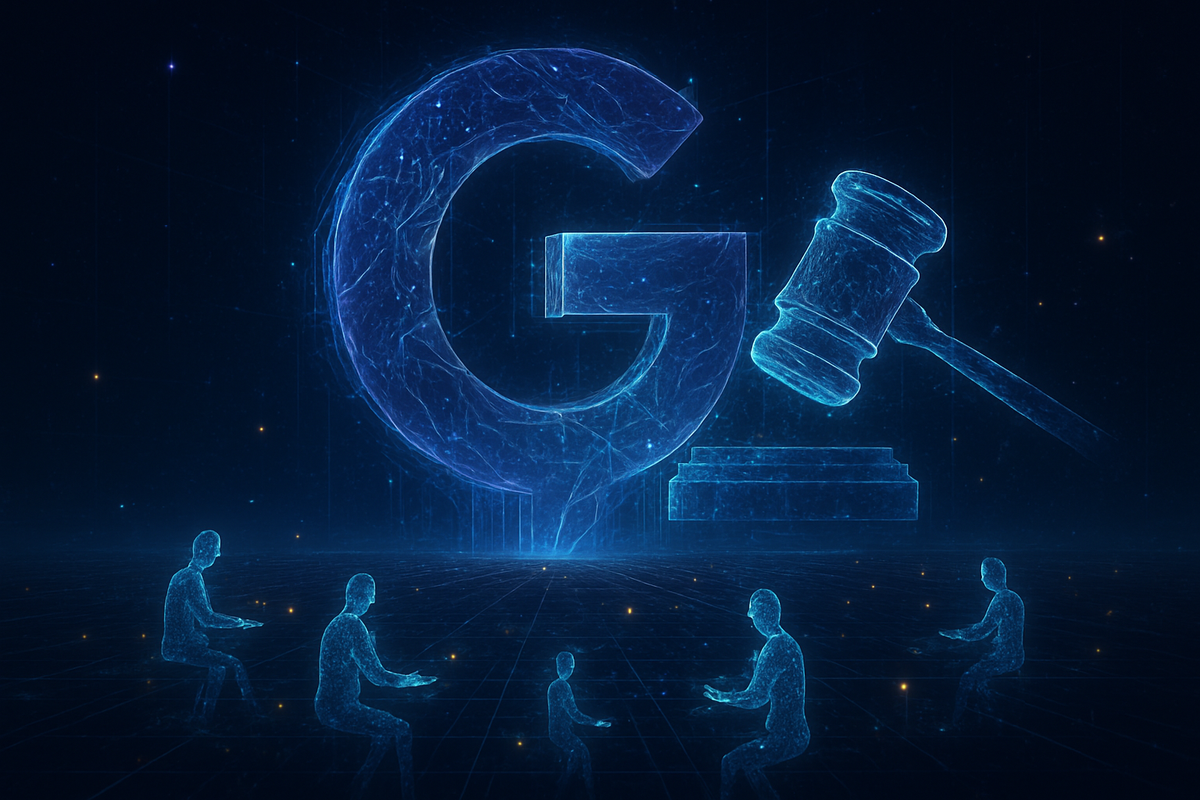
As the calendar turns to 2026, Alphabet Inc. (NASDAQ: GOOGL) finds itself at a historic crossroads, arguably the most pivotal moment in its 27-year history. The tech titan is entering the new fiscal year as a financial juggernaut, with analysts projecting revenues to exceed $450 billion, yet it does so under the shadow of a judicial mandate that is beginning to dismantle its decades-old search monopoly. The coming twelve months will test whether the company’s "AI-first" pivot can outpace the structural erosion of its core advertising business.
The immediate implications for investors are profound. While the U.S. Department of Justice (DOJ) failed to secure a full breakup of the company's Android and Chrome units in late 2025, the court-ordered ban on exclusive search defaults—most notably the multi-billion dollar agreement with Apple Inc. (NASDAQ: AAPL)—is set to take full effect in 2026. This, combined with a looming structural divestiture in the AdTech space, has created a "dual-track" reality for Alphabet: a company that is technically more vulnerable than ever, yet remains the undisputed leader in the "Agentic AI" revolution that is expected to redefine the internet.
The Regulatory Siege: A Timeline of the 2025 Rulings
The road to 2026 was paved by a series of high-stakes courtroom battles that reached their climax in the latter half of 2025. Following the landmark August 2024 liability ruling, Judge Amit Mehta issued a final remedies order on September 2, 2025, in the U.S. v. Google Search case. While the court stopped short of forcing a sale of the Chrome browser—a move many analysts feared would be "existential"—it imposed a rigorous 10-year data-sharing mandate. Starting in January 2026, Alphabet must share its vast search index and user-interaction data with "Qualified Competitors," a move designed to lower the barrier to entry for rival search engines.
Furthermore, 2026 marks the first full year of the "Choice Screen" era in the United States. Under the court's direction, all new mobile devices must present users with a clear selection of search engines during setup, mirroring regulations previously seen in the European Union. This regulatory shift is expected to chip away at Google’s 90% market share, with internal projections suggesting a potential 3% to 5% slip in domestic search volume as users experiment with alternatives.
Parallel to the search case, the DOJ’s AdTech lawsuit also reached a critical juncture. In April 2025, Judge Leonie Brinkema ruled that Google held an illegal monopoly over the technology used to buy and sell online ads. By October 2025, the remedy phase concluded with strong signals that the court would order a structural divestiture of Google Ad Manager, specifically the AdX exchange. A final decision on this breakup is expected by mid-2026, potentially forcing Alphabet to spin off a core component of its "Network" revenue segment.
Winners and Losers in the Post-Monopoly Era
The primary beneficiaries of Alphabet’s regulatory headwinds are its direct competitors in the search and advertising sectors. Microsoft Corp. (NASDAQ: MSFT), through its Bing search engine, is positioned to be the biggest "winner" of the choice screen mandate. Analysts expect Bing’s market share to climb toward 12% in 2026, bolstered by its deep integration with OpenAI’s technology. Similarly, privacy-centric search engines like DuckDuckGo are expected to see a surge in user acquisition as the "default" status of Google Search evaporates.
In the AdTech space, independent platforms such as Magnite, Inc. (NASDAQ: MGNI) and PubMatic, Inc. (NASDAQ: PUBM) are poised to gain significant market share if Google is forced to divest its AdX exchange. These companies have long argued that Google’s vertically integrated stack created an unfair "conflict of interest" by acting as both the buyer’s agent and the seller’s agent. A forced breakup would likely lead to a more fragmented and competitive auction market, driving higher margins for independent ad-tech players.
Conversely, the "losers" in this scenario include Alphabet’s own Network revenue division, which has already seen stagnating growth throughout 2025. While the core "Google Search & Other" segment remains robust, the regulatory-induced friction in the ad-buying process could lead to a temporary dip in advertiser ROI as the industry adjusts to a post-Google-dominant stack. Furthermore, Nvidia Corp. (NASDAQ: NVDA) may see a subtle shift in demand; as Alphabet increasingly relies on its own custom Tensor Processing Units (TPUs) to offset the massive costs of AI search, the company’s reliance on external GPU hardware is projected to slightly decelerate in the 2026 fiscal year.
From Search to "Answer Engines": The AI Shift
The regulatory pressure on Alphabet coincides with a fundamental shift in how the world accesses information. The traditional "list of blue links" is rapidly being replaced by "Answer Engines" and "Agentic AI." Alphabet’s response to this threat has been the aggressive rollout of Gemini 3.0 and its new "Antigravity" platform. Heading into 2026, Google is pivoting away from being a mere search engine to becoming a provider of autonomous digital agents that can plan travel, manage emails, and execute complex workflows across the Chrome ecosystem.
This transition is significant because it represents a move from a "cost-per-click" (CPC) advertising model toward "Agentic Commerce." In 2026, analysts expect Alphabet to begin monetizing AI-driven transactions, where the company takes a small percentage of a purchase completed by an AI agent. This shift is a direct response to Gartner’s projection that traditional search volume could drop by as much as 25% by 2026 as users migrate toward direct-answer platforms like Perplexity and SearchGPT.
The broader industry significance of this moment cannot be overstated. Much like the 1990s antitrust case against Microsoft opened the door for the web browser revolution, the current dismantling of Google’s search exclusivity is occurring just as the AI era begins. The ripple effects are already being felt across the "Magnificent Seven," as companies race to build closed-loop AI ecosystems that do not rely on a third-party search engine for discovery or monetization.
The 2026 Outlook: Strategic Pivots and Waymo’s Rise
Looking ahead to the remainder of 2026, Alphabet’s management is expected to execute several strategic pivots to maintain its valuation. Short-term, the company is focused on "AI efficiency," using its custom TPU infrastructure to bring down the cost of AI-generated answers. Long-term, the market is closely watching the potential for a Waymo IPO. With Waymo reaching a milestone of 1 million weekly rides in late 2025, analysts believe a spin-off or public offering in 2026 could unlock over $100 billion in shareholder value, providing a much-needed catalyst to offset regulatory concerns.
The biggest challenge for Alphabet in 2026 will be navigating the "AdTech Divorce." If the court orders a divestiture of AdX, Alphabet will need to reinvent its relationship with third-party publishers. This may lead to a more "walled garden" approach, where Alphabet focuses exclusively on its "Owned and Operated" properties—YouTube, Search, and Maps—while letting go of the lower-margin network business. Such a move could actually lead to higher overall operating margins, a "leaner and meaner" Alphabet that some investors are already beginning to price in.
Conclusion: A Resilient Giant in a New World
As we enter 2026, the narrative surrounding Alphabet is no longer about whether it will remain a monopoly, but how it will thrive as a "normal" competitor in a hyper-competitive AI landscape. The key takeaways for the year ahead are clear: Alphabet’s revenue growth remains remarkably resilient, driven by a 34% year-over-year surge in Google Cloud and the maturation of Gemini 3.0. While the regulatory "Choice Screens" and the potential AdTech breakup will undoubtedly cause friction, the company's "full-stack" AI advantage provides a formidable moat that few can cross.
For investors, the coming months will be defined by "execution over litigation." While the headlines will likely remain dominated by the DOJ’s next moves, the real story lies in the adoption rates of Agentic AI and the path to 25% operating margins in the Cloud division. Alphabet is a company being forced to evolve by the government, but it is an evolution that may ultimately lead to a more focused and profitable enterprise. In the 2026 fiscal year, the market will finally see if the "G" in Google still stands for growth, or if it has transitioned into a new era of "Governance and Guardrails."
This content is intended for informational purposes only and is not financial advice.