As the final trading days of 2025 wind down, Bernstein has signaled a major shift in the industrial landscape, significantly raising its price target for Caterpillar Inc. (NYSE: CAT). Analyst Chad Dillard increased the firm's target to $630 from a previous $557, a move that underscores a growing conviction that the industrial giant is transitioning from a cyclical construction-heavy business into a secular growth powerhouse. While the firm maintained a "Market Perform" rating, the revised target reflects a 13% upside and a belief that the upcoming year will serve as the final bridge to a robust recovery starting in 2026.
This bullish adjustment comes at a time when the broader industrial sector is grappling with the tail end of high interest rates and fluctuating global demand. Bernstein’s thesis posits that while 2025 may still face "difficult fundamentals"—including potential downward revisions in consensus earnings—the long-term structural demand for power generation and infrastructure will create an "inflection point" in 2026. For investors, the move highlights Caterpillar's unique position at the intersection of traditional heavy machinery and the burgeoning energy needs of the digital economy.
The Road to $630: Bernstein’s Strategic Revaluation
The decision by Bernstein to hike Caterpillar’s price target is rooted in a detailed analysis of the company’s shifting revenue mix. Analyst Chad Dillard pointed to 2025 as a necessary "transition year," where the market will likely absorb the last of the macro-economic headwinds before a broad-based machinery recovery takes hold. Throughout late 2024 and 2025, Caterpillar has demonstrated remarkable financial resilience, recently reporting a "beat and raise" third quarter with revenues hitting $17.64 billion. This performance has been overseen by the new CEO, Joseph E. Creed, who took the helm in 2025 and has doubled down on a 2030 strategy focused on high-margin services and energy transition technologies.
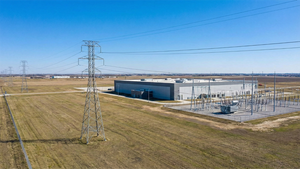
A central pillar of the Bernstein upgrade is the "Power Generation" story. Dillard argues that Caterpillar is no longer just a proxy for global construction activity. Instead, it is becoming a primary beneficiary of the global explosion in data center construction and electrical grid modernization. The report notes that Caterpillar’s large-scale natural gas engines and turbines are increasingly being utilized for data center prime power, a market where the service opportunity is estimated to be 40 times larger than traditional diesel backup systems. This shift provides a high-margin, recurring revenue stream that was less prominent in previous cycles.
Market reaction to the Bernstein report has been cautiously optimistic. While Caterpillar’s stock has already seen a significant run-up of approximately 60% over the course of 2025, the new $630 target suggests there is still room for growth as the "2026 recovery" narrative gains traction. The timeline leading up to this moment has been defined by Caterpillar’s ability to maintain record-breaking profit margins despite a cooling in certain residential construction markets, a feat that has separated it from many of its industrial peers.
Sector Divergence: Winners and Losers in the Industrial Shift
The Bernstein analysis does more than just shine a light on Caterpillar; it creates a stark contrast between the winners and losers of the current industrial cycle. While Caterpillar (NYSE: CAT) is riding the wave of energy and infrastructure demand, its primary rival, Deere & Co. (NYSE: DE), is facing a much steeper climb. Bernstein also raised its price target for Deere to $521 from $487 in late December 2025, but the outlook remains more tempered. Unlike Caterpillar, Deere is heavily exposed to the agricultural cycle, which is currently mired in a severe downturn. Bernstein views 2026 not as a year of broad recovery for Deere, but rather as the "trough" or bottom of the large agriculture cycle.
Other players in the heavy equipment and power space are also feeling the ripple effects of this thesis. Companies like United Rentals, Inc. (NYSE: URI) and Cummins Inc. (NYSE: CMI) are expected to benefit from the same infrastructure and power generation tailwinds that are boosting Caterpillar. However, firms with high exposure to the residential housing market or specialized niche manufacturing may struggle to keep pace. The "winners" in this environment are those with the scale to support massive multi-year projects, such as the 50 GW engine and turbine capacity expansion Caterpillar is aiming for by 2030.
The divergence between the "Power Gen" winners and the "Ag Cycle" laggards suggests a period of intense stock picking for industrial investors. Caterpillar’s ability to return over $10 billion to shareholders through buybacks and dividends in the past year has provided a "cushion" of liquidity that many smaller competitors lack. As 2026 approaches, the market is likely to reward companies that have successfully diversified away from purely cyclical end-markets into secular growth areas like renewable energy storage and data center infrastructure.
Data Centers and the AI Revolution: A Secular Tailwind
The wider significance of Bernstein’s upgrade lies in its recognition of the industrial sector's role in the AI revolution. The massive computing power required for artificial intelligence has triggered an unprecedented surge in data center demand, which in turn requires reliable, high-capacity power solutions. This event fits into a broader trend where industrial companies are becoming the backbone of the digital economy. Caterpillar’s gas turbines are no longer just for remote mining sites; they are now the critical infrastructure keeping the world’s most advanced AI models running.
This trend mirrors historical precedents where industrial giants pivoted to meet the needs of the prevailing economic era—much like the shift toward massive infrastructure projects during the post-WWII boom. However, the current shift is unique because it combines heavy machinery with sophisticated software and service components. Bernstein’s focus on the 40x service opportunity for natural gas engines highlights a move toward "servitization," where the long-term value of a machine lies in its maintenance and performance optimization rather than just the initial sale.
Regulatory and policy implications also play a significant role in this 2026 recovery thesis. As governments worldwide push for grid modernization and energy security, Caterpillar’s diversified portfolio of "all-of-the-above" energy solutions—from traditional diesel to hydrogen-capable turbines—positions it as a partner for both public and private sectors. The easing of monetary policy expected throughout 2025 is also seen as a catalyst that will unlock delayed capital expenditures in the construction and mining sectors, further fueling the 2026 rebound.
Looking Ahead: The 2026 Inflection Point
In the short term, investors should prepare for a period of consolidation. Bernstein’s "Market Perform" rating suggests that while the $630 target is achievable, the path there may be volatile as the market digests "difficult fundamentals" in the first half of 2026. The primary challenge for Caterpillar will be managing its supply chain and labor costs as it scales up to meet the 50 GW capacity target. Any delays in data center build-outs or a slowdown in global infrastructure spending could pose a risk to the 2026 recovery timeline.
Long-term, the strategic pivot toward power generation and high-margin services appears to be a permanent evolution for the company. The "Smart Industrial" strategy, which integrates autonomous technology and predictive maintenance, will be a key differentiator. If Caterpillar can successfully navigate the transition year of 2025, it will enter 2026 with a leaner, more efficient operation capable of capturing a larger share of the global energy transition market. The potential for a "broad-based recovery" in machinery stocks by 2026 remains the base case, provided macro-economic conditions stabilize.
Investor Wrap-Up: Navigating the Industrial Landscape
The key takeaway from Bernstein’s recent analysis is that the industrial sector is undergoing a profound transformation. Caterpillar’s price target hike to $630 serves as a barometer for the health of the broader economy and the specific strength of the energy and infrastructure segments. While 2025 may require patience as the market works through the remnants of a high-interest-rate environment, the outlook for 2026 is increasingly bright for those positioned in the right sub-sectors.
Moving forward, investors should keep a close eye on quarterly earnings reports for signs of stabilizing demand in construction and mining. Additionally, the progress of the leadership transition under CEO Joseph E. Creed will be critical in determining whether Caterpillar can meet its ambitious 2030 goals. The industrial sector is no longer just about moving dirt; it’s about powering the future, and Caterpillar remains at the forefront of that movement.
This content is intended for informational purposes only and is not financial advice.