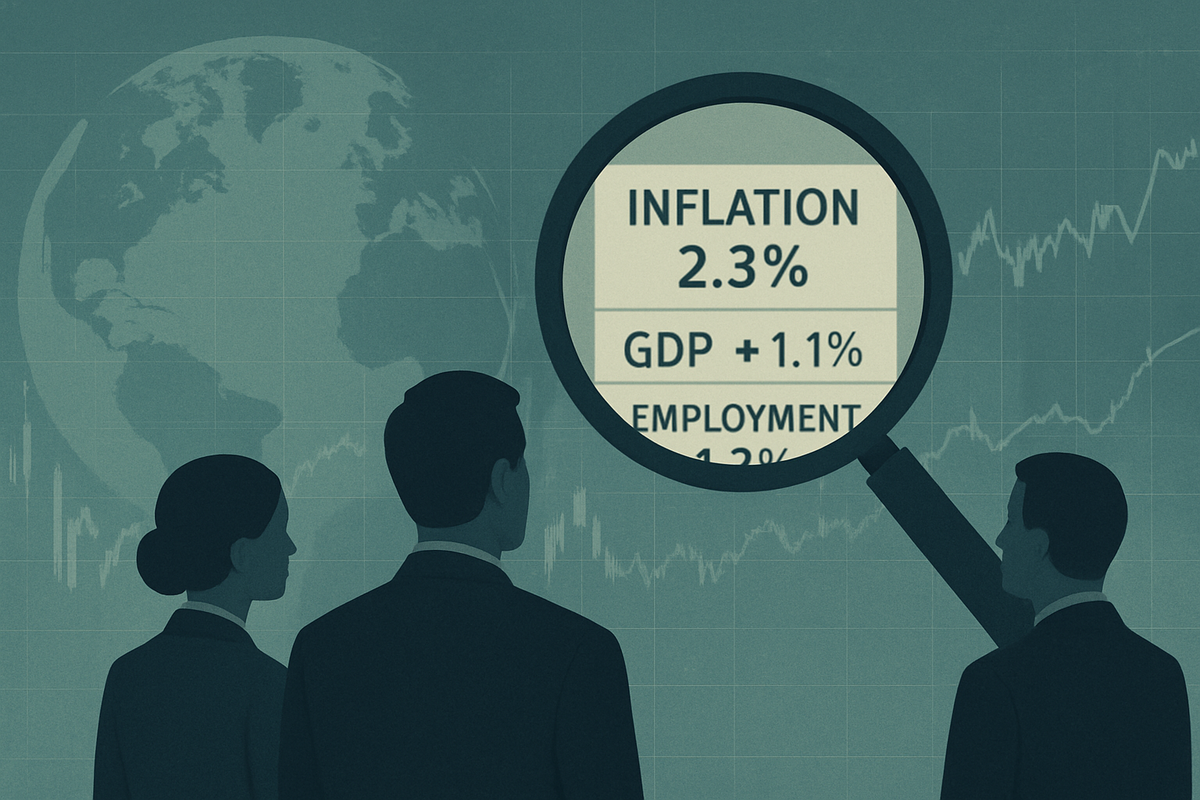
Global stock markets are currently grappling with a significant struggle for fresh momentum, as investors worldwide adopt a decidedly cautious stance in anticipation of a critical wave of economic data releases. This period of heightened vigilance, particularly pronounced in early December 2025, is creating a tense atmosphere across major indices, with market participants holding their breath for clearer signals on inflation, employment, and central bank policy. The prevailing sentiment is a complex blend of apprehension regarding potential economic headwinds and a cautious optimism fueled by the strong expectation of future interest rate cuts, primarily from the U.S. Federal Reserve.
This delicate balance is leading to notable fluctuations in market stability and trading volumes. While some major U.S. indices have shown resilience and even bullish momentum, global markets broadly reflect a wait-and-see approach, with significant strategic decisions being deferred until the fog of uncertainty begins to lift. The coming weeks are poised to be pivotal, potentially dictating the trajectory of financial markets into the new year.
Awaiting the Economic Verdict: Key Data Points and Market Reactions
The current market stasis is largely a direct consequence of several highly anticipated economic reports and central bank pronouncements scheduled for December 2025. At the forefront is the Federal Reserve's meeting on December 9-10, which analysts widely regard as the "biggest event of December." Market participants are pricing in a high probability, ranging from 60% to nearly 90%, of a Fed rate cut, a reflection of growing concerns over employment and economic growth risks amidst a softening labor market. This expectation alone has been a significant driver of cautious optimism, helping to stabilize markets despite underlying anxieties.
Inflation data is another critical watchpoint. The October PCE Price Index (Personal Consumption Expenditures), the Federal Reserve's preferred inflation gauge, is expected on December 5th. This report is seen as a "pivotal moment for Wall Street" to ascertain if inflation is indeed trending towards the Fed's 2% target or proving more persistent. Economists are forecasting headline PCE to rise around 2.8% year-over-year, with core inflation near 2.9%. Following this, the CPI Inflation Report, the final inflation reading of 2025, due around December 18th, is anticipated to be "potentially explosive for markets," influencing perceptions of price stickiness and demand-driven easing. Concurrently, November CPI data for the Eurozone is also a key macroeconomic event, contributing to global inflationary concerns.
Employment figures are adding to the complexity. The ADP Employment Report, released on December 3rd, indicated that private businesses cut 32,000 jobs in November, marking the largest decline since spring 2023, primarily impacting small businesses. This report has taken on "amplified importance" due to delays in official U.S. Labor Department employment figures caused by a recent government shutdown. The official U.S. employment data, expected after the Fed's December 10th decision, will be crucial for the Fed's dual mandate of maximum employment and price stability. Broader economic health indicators also show mixed signals; the US ISM Manufacturing Index (ISM) slipped to 48.2 in November, indicating a ninth consecutive month of contraction in factory activity, while the US ISM Services Index showed better-than-expected growth. The German economy (DAX) stagnated in Q3 2025 with 0% growth, further highlighting uneven global economic performance.
Initial market reactions have been characterized by an initial pullback followed by a cautious recovery. Global markets started December with a cautious tone after a strong November rally. U.S. equities saw a downturn on December 2nd, with major indices dipping. However, by December 3rd, U.S. stocks, including the S&P 500 (INDEXSP:.INX), Dow Jones Industrial Average (INDEXDJX:.DJI), and Nasdaq Composite (INDEXNASDAQ: .IXIC), "reversed early weakness" and moved closer to all-time highs, displaying "strong bullish momentum." This rebound was partly driven by easing Treasury yields and increased hopes for Fed rate cuts. Regionally, Asian markets opened December on a mixed note, with Japan's Nikkei 225 (INDEXNIKKEI:NI225) index slipping due to a strengthening yen and hawkish signals from the Bank of Japan. European equities initially fell but generally rose by December 3rd as risk appetite improved, though caution lingered ahead of key data.
Corporate Fortunes Hang in the Balance: Potential Winners and Losers
The prevailing atmosphere of investor caution, coupled with the imminent economic data releases, creates a highly bifurcated landscape for public companies. Their fortunes will largely hinge on the direction of interest rates, inflation, and employment figures, with certain sectors and individual firms poised to either gain or suffer significantly.
Companies within the Financials sector are exceptionally sensitive to interest rate fluctuations. Should the Federal Reserve proceed with anticipated rate cuts, institutions like JPMorgan Chase & Co. (NYSE: JPM) and Bank of America Corporation (NYSE: BAC) might see their net interest margins – the difference between what they earn on loans and pay on deposits – compress, potentially impacting profitability. Conversely, if economic data suggests inflation remains sticky, forcing the Fed to maintain or even hike rates, these banks could benefit from wider spreads. Similarly, investment managers like The Charles Schwab Corporation (NYSE: SCHW), which profit from higher yields on client cash, would see their earnings decline with rate cuts.
The Real Estate & Homebuilding sectors are particularly vulnerable to interest rate movements. Lower mortgage rates, a likely outcome of Fed rate cuts, would significantly boost housing demand and affordability. This scenario would be a boon for homebuilders such as PulteGroup (NYSE: PHM) and Lennar Corporation (NYSE: LEN), increasing their sales volumes and profitability. Conversely, higher rates would dampen the housing market, posing a challenge for these companies. Technology & Growth Stocks, including giants like Apple Inc. (NASDAQ: AAPL) and Microsoft Corp. (NASDAQ: MSFT), are also highly sensitive. Lower interest rates reduce the discount rate applied to their future earnings, making their valuations more attractive and potentially driving stock performance. However, if inflation persists and interest rates remain elevated, their growth prospects could be discounted more heavily.
On the inflation front, Energy & Materials sectors tend to be beneficiaries. Companies like Chevron (NYSE: CVX) and ExxonMobil (NYSE: XOM), as well as materials producers like Steel Dynamics (NASDAQ: STLD), often see their profits boosted by higher commodity prices. Consumer Staples companies, such as The Coca-Cola Company (NYSE: KO) and Procter & Gamble (NYSE: PG), possess strong brand recognition and pricing power, allowing them to pass on increased input costs to consumers without significant loss of demand, thus performing relatively well in inflationary environments. Conversely, Consumer Discretionary companies, including restaurants like McDonald's (NYSE: MCD) and auto manufacturers like Tesla (NASDAQ: TSLA), typically suffer as reduced consumer purchasing power forces cutbacks on non-essential spending. A weak employment report, as suggested by the recent ADP data, would further exacerbate challenges for these consumer-facing businesses, impacting their revenues and profitability.
Broader Implications: A Shifting Economic Landscape
The current phase of investor caution, driven by the impending economic data, is not an isolated event but rather fits into a broader narrative of an economy in transition. The market's intense focus on inflation, interest rates, and employment reflects the ongoing struggle between persistent price pressures and signs of a softening labor market, a delicate balancing act for central banks worldwide. This environment suggests a potential pivot from a period of aggressive monetary tightening to one of cautious easing, or at least a pause, which has significant ripple effects across the entire financial ecosystem.
The potential for Fed rate cuts, if confirmed by the upcoming data, could signal a broader shift in monetary policy globally. Other central banks, such as the European Central Bank (ECB) and the Bank of Japan (BOJ), often monitor the Fed's actions, and a dovish turn in the U.S. could pave the way for similar adjustments abroad, influencing global capital flows and currency valuations. This would alleviate pressure on highly indebted companies and governments but could also reignite inflationary concerns if not managed carefully. Conversely, if inflation proves more stubborn than anticipated, central banks might be forced to maintain higher rates for longer, potentially leading to a more pronounced economic slowdown and increased risk of recession.
Regulatory and policy implications are also significant. Governments and financial regulators are closely watching how economic conditions evolve, particularly concerning employment and financial stability. A weakening labor market could prompt fiscal stimulus measures or adjustments to unemployment benefits, while persistent inflation might lead to greater scrutiny of corporate pricing practices. The emphasis on data-driven policy decisions means that the upcoming reports could directly influence legislative priorities and regulatory frameworks in the coming months, potentially impacting sectors from housing to manufacturing.
Historically, periods of significant economic uncertainty, particularly those involving transitions in monetary policy, have been characterized by increased market volatility. Comparisons can be drawn to early 2000s when the dot-com bubble burst and the Fed adjusted rates, or the post-2008 financial crisis recovery where central banks navigated unprecedented easing. While the specifics differ, the common thread is a market grappling with a paradigm shift, where traditional indicators are re-evaluated, and investor sentiment swings between fear and opportunity. The current environment, with its mix of strong job losses in some sectors (ADP report) and overall market resilience, suggests a unique challenge for policymakers and investors alike, demanding careful analysis beyond simple historical parallels.
The Road Ahead: Navigating Short-Term Volatility and Long-Term Shifts
The immediate future for global markets will be dictated by the clarity that the upcoming economic data provides. In the short term, increased market volatility is almost a certainty, especially around the Federal Reserve meeting on December 9-10 and the subsequent inflation and employment reports. Investors should anticipate sharp price movements as the market reacts to each data point, potentially leading to periods of heightened risk-off sentiment followed by opportunistic buying. The strong anticipation of Fed rate cuts, if realized, could provide a much-needed boost to market sentiment, particularly for growth-oriented sectors and companies sensitive to borrowing costs. However, any indication of persistent inflation or a more severe downturn in employment could trigger significant corrections.
Looking to the long term, the global economy is projected to experience moderated growth through 2025 and 2026, averaging around 2.6% to 3.3%. This slowdown, influenced by the winding down of temporary stimulants and ongoing geopolitical and trade tensions, necessitates strategic pivots for both investors and businesses. The United States is anticipated to show relative resilience, with growth around 1.7% to 2.4% in 2025, partly due to an AI-related investment boom. This suggests continued opportunities in technology and related infrastructure. In contrast, the Eurozone is expected to see modest growth, while China's economy continues to moderate, facing challenges from subdued consumption and a contracting real estate sector. India, however, is projected to maintain its position as a fast-growing major economy.
For investors, strategic pivots will involve careful geographic diversification, with India's strong growth trajectory making it an attractive market alongside the resilient U.S. economy. A heightened focus on sector-specific opportunities, particularly in artificial intelligence, defense, and infrastructure, will be crucial. Given the persistent geopolitical tensions and trade protectionism, robust risk management through diversified portfolios and hedging strategies will be paramount. For businesses, the emphasis shifts to enhancing supply chain resilience through diversification or regionalization of production to mitigate risks from increased trade barriers. Digital transformation and AI integration will not just be an opportunity but a necessity to drive productivity gains and develop new business models across all sectors. A renewed focus on cost management and operational efficiency will also be vital in a moderated growth environment.
Potential market opportunities include the continued AI boom, driving investment in hardware, software, and AI-enabled services, as well as growth in the broader digital economy. Increased government spending in infrastructure and defense in certain regions, particularly Europe, could also create demand. However, significant challenges loom. Geopolitical tensions and protectionism remain a major downside risk, potentially disrupting global trade and supply chains. Policy uncertainty, particularly concerning trade and tariffs, can hinder investment. The risk of U.S. inflation remaining above target could lead to "higher for longer" interest rates, impacting financial conditions globally. Furthermore, fiscal vulnerabilities in many countries and the potential for financial market corrections in highly valued assets could threaten stability. The overall outlook points to an "uneven recovery" scenario, where global growth remains subdued and highly divergent, emphasizing the importance of selective investment and active management.
Comprehensive Wrap-Up: Navigating a Period of Deliberation and Divergence
The current financial market landscape is defined by a deep-seated investor caution, largely a prelude to a series of pivotal economic data releases in December 2025. The core takeaway is that global stock markets are in a holding pattern, struggling to find fresh momentum as participants await definitive signals on inflation, employment, and, most critically, the future trajectory of central bank monetary policy. This period of deliberation underscores the profound influence of macroeconomic indicators on market sentiment and asset valuations.
Moving forward, the market's direction will be heavily swayed by how these upcoming data points align with, or diverge from, current expectations. A confirmation of easing inflationary pressures and signs of a controlled softening in the labor market could pave the way for anticipated interest rate cuts, potentially reigniting a broader risk-on appetite and supporting equity markets. Conversely, any surprises – such as stubbornly high inflation or a sharper-than-expected deterioration in employment – could trigger renewed volatility, prompting investors to retreat to safer assets.
The lasting impact of this period will likely be a heightened awareness of economic fundamentals and a greater emphasis on adaptive investment strategies. Investors should watch closely for the Federal Reserve's stance post-meeting, the nuances of the PCE and CPI inflation reports, and the official U.S. employment figures. Beyond these immediate catalysts, monitoring global trade dynamics, geopolitical developments, and the fiscal health of major economies will be crucial. The market is not merely reacting to data; it is attempting to price in a future where economic growth is moderated, and policy decisions are finely balanced. This demands a nuanced approach, prioritizing resilience, diversification, and a keen eye on both opportunities arising from innovation (like AI) and challenges posed by persistent uncertainties.
This content is intended for informational purposes only and is not financial advice