In a landmark announcement on December 22, 2025, energy giants Shell and INEOS Energy revealed a significant oil discovery at the Nashville exploration well, situated in the deepwater Norphlet play of the U.S. Gulf of Mexico—a region now increasingly referred to by industry and government officials as the "Gulf of America." The discovery marks a pivotal moment for domestic energy security, signaling that the high-pressure, high-temperature (HPHT) reservoirs of the Norphlet formation still hold vast, untapped potential for high-margin production.
The Nashville find is the first major success of the Shell-INEOS partnership since the latter’s strategic entry into the basin. Preliminary data suggests a high-quality oil reservoir that aligns with the partners' most optimistic pre-drill projections. As the global energy landscape continues to navigate the complexities of the transition to lower-carbon sources, this discovery underscores the enduring value of the Gulf’s deepwater assets, which offer some of the lowest carbon-intensity barrels in the world.
Deepwater Success: The Nashville Discovery
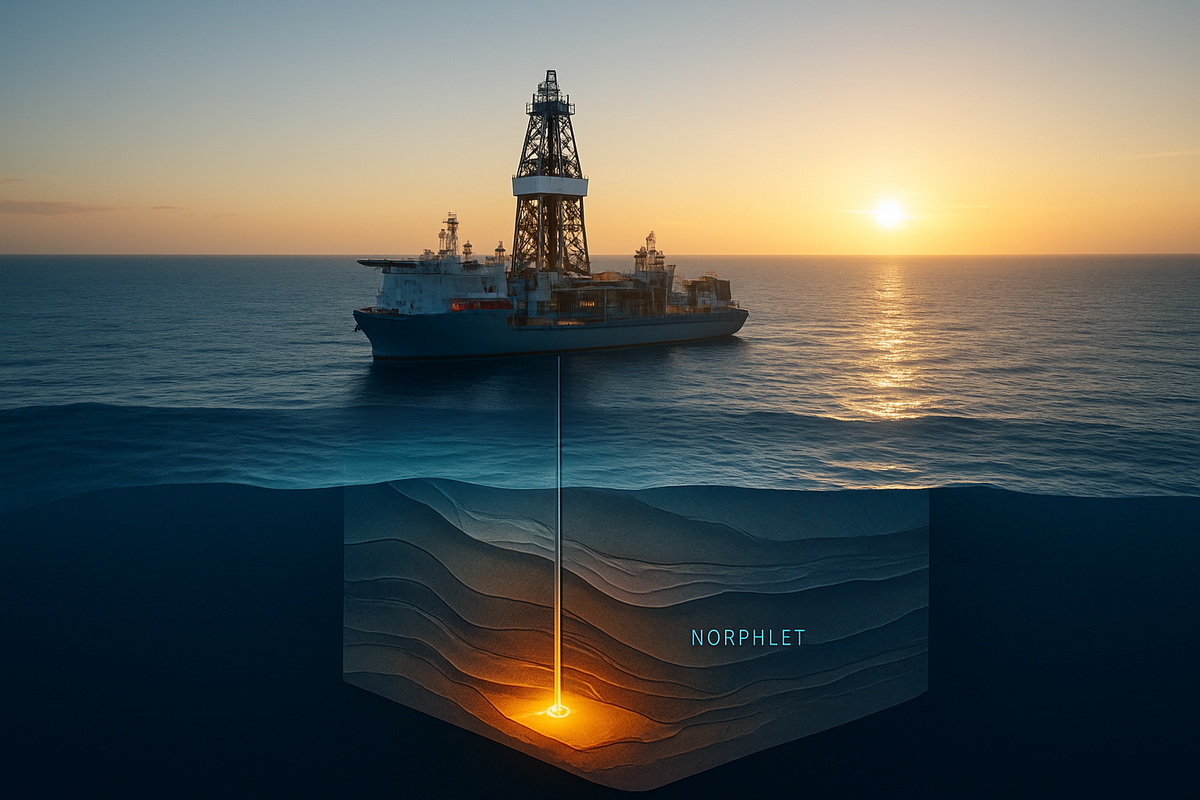
The Nashville exploration well was drilled to a staggering total depth of more than 26,000 feet—over five miles beneath the seabed—targeting the Upper Jurassic Norphlet formation. This geological layer is notorious for its extreme conditions, requiring advanced engineering and specialized equipment to navigate the intense pressure and heat. The operation was carried out by the Deepwater Proteus, an ultra-deepwater drillship owned by Transocean (NYSE: RIG), which has become a workhorse for complex Norphlet campaigns.
The partnership behind the discovery is led by Shell PLC (NYSE: SHEL), which holds a 79% operating interest, with INEOS Energy (the energy arm of the privately held INEOS Group) holding the remaining 21%. The discovery follows a meticulous multi-year exploration strategy that leveraged proprietary seismic imaging to pinpoint reservoirs hidden beneath thick layers of salt. The initial market reaction has been positive, with analysts noting that the Nashville well validates the "infrastructure-led exploration" (ILX) model, which focuses on finding new resources near existing hubs to minimize development time and costs.
Winners and Losers in the Norphlet Trend
The primary beneficiary of the Nashville discovery is undoubtedly Shell PLC (NYSE: SHEL). As the dominant operator in the Norphlet play, Shell continues to solidify its competitive advantage in the region. The discovery is expected to be developed as a subsea tie-back to the nearby Appomattox platform, an existing hub that Shell and INEOS already co-own. By utilizing existing infrastructure, Shell can bring Nashville’s production online with significantly lower capital expenditure than a standalone project would require.
Other major players in the region are also poised to benefit from the renewed interest in the Norphlet trend. Chevron (NYSE: CVX) and TotalEnergies (NYSE: TTE) recently celebrated the startup of the Ballymore field in April 2025, which also utilizes a tie-back strategy to the Blind Faith platform. The success at Nashville provides further "proof of concept" for the Norphlet play, likely boosting the valuation of nearby leases held by these firms. Conversely, companies focused exclusively on onshore shale may face increased pressure from investors to justify their higher carbon-intensity profiles compared to the "advantaged barrels" found in the deepwater Gulf.
The Rebranding of the Gulf and the 'OBBBA' Effect
The discovery at Nashville arrives amid a broader shift in the American energy narrative. Throughout 2025, the U.S. Federal Offshore region has been rebranded as the "Gulf of America" (GOA), a term codified in the One Big Beautiful Bill Act (OBBBA) signed into law in July 2025. This legislation provided new tax incentives for deepwater exploration and streamlined the permitting process for subsea tie-backs, specifically targeting the Norphlet and Paleogene plays.
The Nashville find fits perfectly into the industry's trend toward "high-margin, lower-carbon" production. Because deepwater wells often produce at much higher rates than their onshore counterparts, the carbon footprint per barrel is significantly lower. This discovery also serves as a strategic counterweight to global supply volatility, reinforcing the U.S. position as a leading oil producer. Historically, the Norphlet was seen as a high-risk frontier; however, the technological breakthroughs of the last decade have transformed it into a reliable engine of growth for the majors.
Looking Ahead: Appraisal and Expansion
The short-term focus for Shell and INEOS will be a comprehensive appraisal program scheduled for 2026. This will involve drilling additional wells to determine the exact boundaries of the Nashville reservoir and its total recoverable volumes. If the appraisal confirms the initial high estimates, the partners could move toward a Final Investment Decision (FID) by late 2026, with first oil potentially flowing through the Appomattox hub by 2028.
Long-term, the Nashville discovery may trigger a new wave of leasing activity in the eastern "Gulf of America." As technology continues to improve, reservoirs that were once considered too deep or too hot are becoming viable targets. The challenge for the industry will be managing the technical risks of HPHT environments while navigating a regulatory landscape that, while currently favorable under the OBBBA, remains subject to the shifting winds of domestic politics.
Conclusion: A Strategic Milestone for Energy Security
The Nashville discovery is more than just a successful oil well; it is a testament to the resilience and innovation of the deepwater energy sector. By successfully tapping into the Norphlet play, Shell and INEOS have demonstrated that the "Gulf of America" remains a cornerstone of the global energy map. For investors, the takeaway is clear: the deepwater Gulf is entering a new era of efficiency, where infrastructure-led exploration is reducing risks and enhancing returns.
Moving forward, the market should watch for the results of the 2026 appraisal wells and any further policy developments stemming from the OBBBA. As the energy transition progresses, the ability to produce "advantaged barrels" like those found at Nashville will be the key differentiator between the winners and losers in the global oil and gas industry.
This content is intended for informational purposes only and is not financial advice