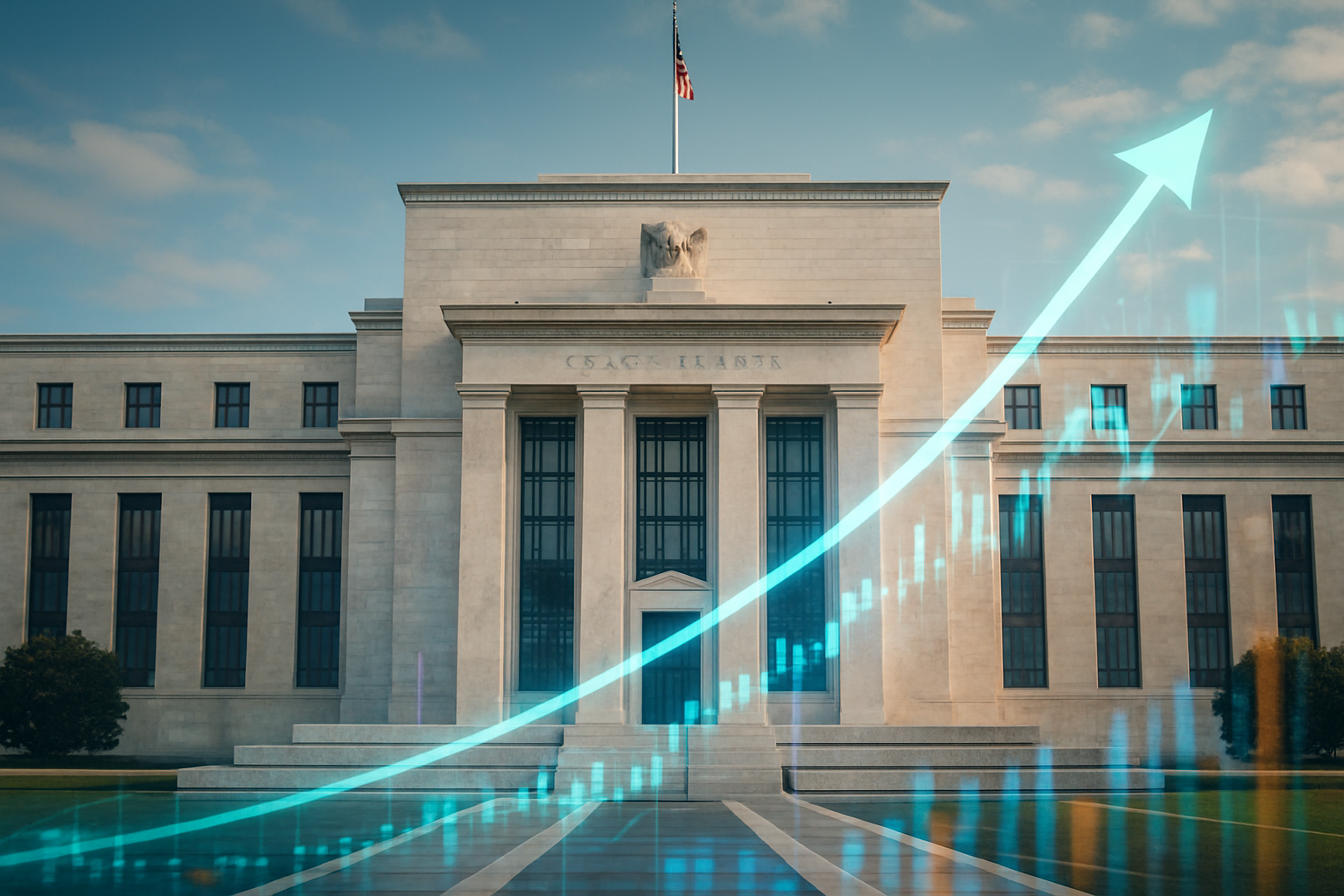
Washington D.C. – December 11, 2025 – The Federal Reserve delivered its third consecutive interest rate cut of the year yesterday, lowering the benchmark federal funds rate by 25 basis points to a target range of 3.50% to 3.75%. This widely anticipated move, announced on December 10, 2025, sent a clear signal of the central bank's commitment to supporting a decelerating economy, triggering an immediate and broadly positive reaction across global financial markets. Investors, grappling with signs of a softening labor market and persistent, albeit "somewhat elevated," inflation, largely welcomed the Fed's dovish stance, pushing major stock indices higher and sparking optimism for the year-end.
The decision reflects a delicate balancing act for policymakers, who are navigating an economic landscape marked by conflicting signals. While the rate cuts aim to stimulate growth and bolster employment, the Fed must also remain vigilant against inflationary pressures. The immediate market enthusiasm underscores a prevailing sentiment that lower borrowing costs will provide a crucial tailwind for businesses and consumers, potentially extending the current economic cycle and bolstering corporate earnings in the near term.
The Fed's Measured Easing: A Closer Look at December's Decision
The Federal Reserve's latest action on December 10, 2025, saw the Federal Open Market Committee (FOMC) reduce the federal funds rate by 25 basis points, marking a cumulative 75 basis points in cuts throughout 2025, following similar reductions in September and October. This series of adjustments came after a period of steady rates maintained since December 2024, signaling a distinct pivot in monetary policy. The decision was not entirely unanimous, with a notable division among FOMC members, indicating the complex economic outlook. Nine members voted for the 25 basis point cut, one favored a more aggressive 50 basis point reduction, and two preferred to hold rates steady, highlighting the most significant dissent seen in six years.
This shift in policy has been largely driven by a cooling labor market and ongoing inflationary concerns. Data leading up to the December meeting showed a perceptible slowdown in job gains, with the unemployment rate ticking up to 4.4% in September 2025. This weakening trend in employment put pressure on the Fed to act to prevent a more significant economic downturn. Compounding the challenge, inflation, while not spiraling, remained "somewhat elevated," adding a layer of complexity to the Fed's dual mandate of maximum employment and price stability. Furthermore, a government shutdown had delayed the release of crucial economic reports, forcing policymakers to make decisions with incomplete data. Federal Reserve Chair Jerome Powell, in his post-meeting remarks, emphasized that the central bank is not contemplating further rate hikes in the immediate future, stating the Fed is "well positioned to wait and see how the economy evolves" before making additional adjustments.
The immediate reaction from the stock market was overwhelmingly positive. Major indexes experienced a significant rally, with the Dow Jones Industrial Average rising by 1.1%, the S&P 500 gaining 0.7%, and the Nasdaq Composite adding 0.3%. The S&P 500 (SPX) closed near an all-time high, just shy of setting a new record. Notably, the Russell 2000 (RUT) index, which tracks small-cap stocks and is often more sensitive to interest rate changes, outperformed its larger counterparts, advancing close to 2% and achieving a new all-time high for the second consecutive session. This strong performance in small-caps often signals investor confidence in future economic growth, as lower borrowing costs disproportionately benefit smaller, growth-oriented companies.
Beyond equities, the bond market also reacted, with government bond yields strengthening. The yield on the 10-year US Treasury note fell to just over 4.14%, reflecting increased demand for bonds in a lower interest rate environment. Concurrently, the U.S. dollar weakened by approximately 0.5% against a basket of foreign currencies, making U.S. exports more competitive and potentially boosting earnings for multinational corporations. Investor sentiment was bolstered by Chair Powell's dovish comments, which, despite hinting at a potential pause in cuts, firmly ruled out near-term hikes, providing a sense of stability and predictability that markets often crave.
Corporate Winners and Losers in a Lower Rate Environment
The Federal Reserve's pivot to a more accommodative monetary policy, characterized by successive rate cuts, creates a distinct landscape of winners and losers across various sectors of the public market. Companies with significant debt loads and those heavily reliant on consumer spending are generally poised to benefit, while others, particularly those in the financial sector, may face headwinds.
Companies poised to win in this environment include growth-oriented technology companies and small-cap businesses. Lower interest rates reduce the cost of borrowing, making it cheaper for companies to finance expansion, research and development, and acquisitions. Tech giants like Microsoft (NASDAQ: MSFT) and Apple (NASDAQ: AAPL), while often cash-rich, can still see their valuation models benefit from lower discount rates applied to future earnings. More significantly, smaller, high-growth firms that often operate on thinner margins and require external financing, such as emerging biotech firms or disruptive tech startups, will find it easier and cheaper to access capital, fueling their expansion. The outperformance of the Russell 2000 (RUT) index immediately following the Fed's announcement underscores this sentiment, as smaller companies are typically more sensitive to changes in borrowing costs. Additionally, consumer discretionary companies like Amazon (NASDAQ: AMZN) and Starbucks (NASDAQ: SBUX) could see a boost as lower interest rates translate to reduced mortgage payments and credit card interest for consumers, freeing up more disposable income. The housing sector, including homebuilders like D.R. Horton (NYSE: DHI) and Lennar (NYSE: LEN), and mortgage lenders, will also likely experience increased demand as mortgages become more affordable, stimulating home sales and construction.
Conversely, companies that may face challenges in a sustained lower interest rate environment primarily include banks and other financial institutions. While lower rates can stimulate loan demand, they also tend to compress net interest margins (NIM) – the difference between the interest banks earn on loans and pay on deposits. Major banks such as JPMorgan Chase (NYSE: JPM), Bank of America (NYSE: BAC), and Wells Fargo (NYSE: WFC) could see reduced profitability from their core lending activities. Insurance companies, which often invest heavily in fixed-income securities, might also experience lower returns on their portfolios as bond yields decline. Furthermore, utility companies and other dividend-paying stocks that are often sought after for their stable income in higher rate environments might see some investor rotation out of their shares as other growth opportunities become more attractive. While a lower rate environment generally supports equity valuations, sectors that thrive on higher interest rate differentials will need to adapt their strategies to maintain profitability.
Broader Economic Implications and Historical Context
The Federal Reserve's recent series of interest rate cuts, culminating in the December 10, 2025, decision, carries significant broader implications for the U.S. and global economies. This shift in monetary policy is primarily aimed at counteracting a slowing job market and supporting economic growth, fitting into a broader trend of central banks globally responding to evolving economic conditions. The Fed's actions are a direct response to a delicate balance between achieving maximum employment and maintaining price stability, particularly as inflation, while not runaway, remains a persistent concern. The easing cycle is intended to inject liquidity into the financial system, encourage borrowing and investment, and ultimately stimulate aggregate demand.
The ripple effects of these rate cuts extend beyond the stock market to other critical sectors. The housing market, for instance, is likely to experience a resurgence. Lower mortgage rates make homeownership more accessible and affordable, potentially boosting demand and supporting home prices. This could benefit ancillary industries such as construction, real estate services, and home improvement retailers. On the international front, a weaker U.S. dollar, a typical consequence of lower interest rates, makes American goods and services more competitive abroad. This could provide a much-needed boost to U.S. exporters and multinational corporations with significant international revenues, such as Caterpillar (NYSE: CAT) or Boeing (NYSE: BA), as their foreign earnings translate into more U.S. dollars. However, it could also lead to imported inflation as foreign goods become more expensive.
From a regulatory and policy standpoint, the Fed's accommodative stance might influence fiscal policy decisions. With monetary policy providing stimulus, there might be less immediate pressure for aggressive fiscal spending, although ongoing debates about infrastructure investment or social programs could still emerge. Historically, periods of sustained rate cuts by the Fed have often been in response to economic slowdowns or recessions, aiming to avert or mitigate their severity. Comparisons can be drawn to easing cycles in the early 2000s or following the 2008 financial crisis, where lower rates were crucial in stabilizing financial markets and fostering recovery. However, each cycle has its unique characteristics, and the current environment of "somewhat elevated" inflation alongside a slowing labor market presents a distinct challenge, requiring careful monitoring to avoid overheating the economy or inadvertently fueling asset bubbles.
The Path Forward: Navigating an Evolving Economic Landscape
Looking ahead, the Federal Reserve's latest interest rate cut on December 10, 2025, sets the stage for a period of careful observation and potential strategic adjustments by businesses and investors. In the short term, the market's positive reaction suggests continued bullish sentiment, particularly for growth stocks and small-cap companies that benefit most from lower borrowing costs. However, the path forward is not without its complexities. The Fed's stated intention to "wait and see how the economy evolves" implies that future decisions will be highly data-dependent, with upcoming reports on inflation, employment, and consumer spending being critical determinants of the next policy moves. Investors should anticipate potential volatility as new economic data is released and interpreted, potentially leading to shifts in market leadership.
In the long term, the implications of a sustained lower interest rate environment could reshape corporate strategies. Companies may find it more attractive to undertake capital expenditures, mergers and acquisitions, and share buybacks, leveraging cheaper financing. This could spur innovation and productivity growth across various sectors. However, businesses will also need to carefully manage their balance sheets, ensuring they are not over-leveraged, as even a gradual shift back to higher rates in the future could pose risks. Market opportunities may emerge in sectors that benefit from increased consumer spending and business investment, such as technology infrastructure, renewable energy, and discretionary consumer goods. Conversely, challenges could arise for companies with limited pricing power or those heavily reliant on robust net interest margins.
Potential scenarios and outcomes for the coming months include a continued "soft landing" where inflation moderates without a significant economic downturn, or a scenario where the Fed's cuts are insufficient, leading to further economic weakening and potentially more aggressive easing. Another possibility is that the stimulus from the rate cuts, combined with persistent demand, could reignite inflationary pressures, forcing the Fed to reconsider its dovish stance. Investors should therefore remain agile, diversifying their portfolios and focusing on companies with strong fundamentals, adaptable business models, and healthy cash flows that can thrive across different economic conditions. The Fed's cautious stance suggests a period of stability in rates for the immediate future, providing a window for strategic planning.
A New Chapter for the Market: Assessing the Lasting Impact
The Federal Reserve's decision on December 10, 2025, to cut interest rates for the third time this year marks a significant turning point, ushering in a new chapter for the financial markets. The key takeaway from this event is the Fed's proactive stance in supporting economic growth and employment amidst signs of deceleration, while attempting to manage persistent, albeit contained, inflationary pressures. The market's immediate enthusiastic response, particularly the strong performance of growth and small-cap stocks, underscores a renewed appetite for risk and optimism about the economic outlook under more accommodative monetary conditions. This pivot away from the previous steady-rate environment signals a commitment to fostering a supportive financial backdrop for businesses and consumers.
Moving forward, the market is likely to be characterized by continued vigilance regarding economic data and the Fed's forward guidance. While the immediate impact has been positive, the long-term assessment will depend on whether these rate cuts successfully stimulate sustainable growth without re-igniting inflation to problematic levels. The lasting impact could be a prolonged period of accessible capital, encouraging investment and innovation across industries, but also potentially leading to increased asset valuations. The shift also highlights the ongoing tension between the Fed's dual mandate, and how it navigates the fine line between stimulating growth and maintaining price stability will be crucial.
Investors should closely watch several key indicators in the coming months. These include inflation reports, particularly core inflation measures, to gauge the effectiveness of the Fed's policies and any signs of overheating. Employment data, including job growth figures and the unemployment rate, will provide insights into the health of the labor market. Furthermore, consumer spending and business investment data will be critical in assessing the real economic impact of the lower interest rate environment. Corporate earnings reports will reveal how companies are adapting to and benefiting from the reduced cost of capital. By meticulously monitoring these factors, investors can better position their portfolios to navigate the evolving economic landscape shaped by the Federal Reserve's latest actions and prepare for potential future shifts in monetary policy.
This content is intended for informational purposes only and is not financial advice