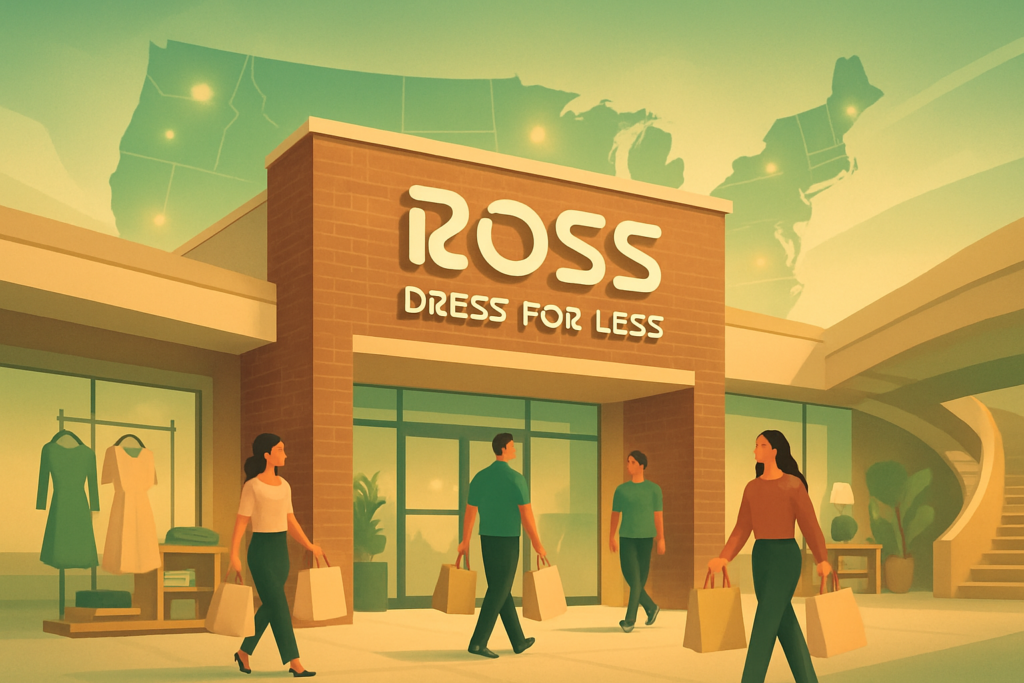
As of March 16, 2026, the retail landscape continues to grapple with shifting consumer spending patterns and persistent macro-economic pressures. Amidst this volatility, Ross Stores, Inc. (NASDAQ: ROST) has emerged not just as a survivor, but as a dominant pacesetter in the off-price retail sector. With a strategy rooted in "treasure hunt" shopping and lean operations, Ross has successfully leveraged the "trade-down" effect, where middle-income consumers migrate from department stores to discount outlets to stretch their dollars. Following a transformative fiscal 2025 and a major leadership transition, the company is currently in the spotlight as it executes an aggressive expansion plan aimed at saturating the U.S. market.
Historical Background
Ross Stores traces its origins to 1982, when a group of investors led by Stuart Moldaw and Bill Isackson purchased a small chain of six department stores in the San Francisco Bay Area. They pivoted the business model to the off-price format—a then-emerging retail strategy popularized by Marshalls. By 1985, the company went public on the NASDAQ, and throughout the 1990s and 2000s, it focused on rapid geographic expansion across the Sunbelt and Western United States.
A key milestone occurred in 2004 with the launch of dd’s DISCOUNTS, a secondary brand targeting lower-income households. Over the last four decades, Ross has evolved from a regional player into a national powerhouse, maintaining a "no-frills" philosophy that prioritizes low overhead to deliver deep discounts (typically 20% to 60% below department store prices).
Business Model
Ross Stores operates under a straightforward yet highly disciplined off-price business model. Unlike traditional retailers that order inventory months in advance based on seasonal forecasts, Ross utilizes "opportunistic buying." Its massive team of buyers works directly with manufacturers to purchase overstocks, canceled orders, and end-of-season clearances at a fraction of the cost.
Key Segments:
- Ross Dress for Less: The core brand, catering to middle-income families looking for name-brand apparel, accessories, footwear, and home fashions.
- dd’s DISCOUNTS: Positioned for a more price-sensitive demographic, offering similar categories but at even lower price points.
The company notably eschews e-commerce, a move that was once criticized but has proven to be a strategic masterstroke. By forcing customers into physical stores, Ross creates a high-turnover "treasure hunt" environment where consumers are encouraged to buy items immediately before they disappear. This model virtually eliminates the high shipping and return costs that plague competitors in the digital space.
Stock Performance Overview
As of mid-March 2026, ROST remains a "best-in-class" performer for long-term shareholders.
- 1-Year Performance: The stock has surged approximately 69% over the past twelve months, fueled by a series of earnings beats and investor confidence in the new CEO's vision.
- 5-Year Performance: Despite the post-pandemic market corrections of 2022-2023, ROST has posted a 70% gain since early 2021, significantly outperforming the broader retail sector.
- 10-Year Performance: Long-term investors have seen a massive 256.6% return. The company’s consistent focus on share buybacks—including a newly authorized $2.55 billion program for 2026—and steady dividend growth has made it a staple in institutional portfolios.
Financial Performance
Ross Stores recently reported its fiscal year 2025 results (ending January 31, 2026), which underscored its operational resilience.
- Revenue: Total sales reached a record $22.8 billion, up 8% year-over-year.
- Comparable Store Sales: "Comps" grew 5% for the year, with a staggering 9% surge in the final quarter, driven by increased foot traffic.
- Margins: Operating margins expanded to 11.3% for the full year, benefiting from improved freight costs and disciplined inventory management.
- Earnings: Full-year Earnings Per Share (EPS) hit $6.61, comfortably exceeding analyst consensus.
- Valuation: The stock currently trades at a forward P/E ratio of approximately 24x, a premium that reflects its consistent growth and strong balance sheet, which boasts over $4.8 billion in liquidity.
Leadership and Management
2025 marked the beginning of a new era for Ross Stores. On February 2, 2025, James ("Jim") Conroy took over as CEO, succeeding the legendary Barbara Rentler. Conroy, formerly the CEO of Boot Barn, was brought in for his reputation in scaling physical retail footprints and modernizing store operations.
Barbara Rentler remains a vital component of the leadership structure as a strategic advisor through March 2027. This transition has been praised by Wall Street for its stability, ensuring that the company’s core merchandising culture remains intact while Conroy introduces modern efficiencies, such as the accelerated rollout of self-checkout technology and advanced data analytics for regional inventory allocation.
Products, Services, and Innovations
While Ross is fundamentally "low-tech" in its customer-facing operations, its back-end innovations provide a sharp competitive edge. The company’s sophisticated distribution center network allows for "pack-away" inventory—buying goods in the off-season and holding them until the following year to maximize margins.
In 2025-2026, Ross has focused on:
- Self-Checkout Expansion: Implementing self-service kiosks in high-traffic stores to reduce wait times and labor costs.
- Assortment Localization: Using AI-driven analytics to tailor inventory specifically to the demographics of individual neighborhoods, particularly in its expanding East Coast and Midwest markets.
Competitive Landscape
The off-price sector is dominated by a "Big Three" trio: Ross, The TJX Companies (NYSE: TJX), and Burlington Stores (NYSE: BURL).
- TJX Companies: The global leader (owner of TJ Maxx, Marshalls, and HomeGoods). While larger, TJX has slightly lower domestic operating margins compared to Ross.
- Burlington: Historically the "third player," Burlington has recently become more aggressive with a "small-store" format that competes directly with Ross’s urban footprint.
- Mass Merchants: While Walmart (NYSE: WMT) and Target (NYSE: TGT) compete on price, they lack the "brand-name-at-a-discount" cachet that drives the Ross customer.
Ross currently maintains an advantage in foot traffic growth, which surged 12% in the most recent quarter, nearly double that of some of its larger peers.
Industry and Market Trends
Retail in 2026 is defined by a "bifurcated consumer." While high-end luxury remains stable, the broad middle class has become increasingly price-sensitive. This "trade-down" behavior is a major tailwind for Ross. Additionally, the continued decline of regional malls has worked in Ross’s favor, as the company primarily operates in open-air "strip" shopping centers where convenience and accessibility are higher.
Supply chain normalization has also helped. After years of post-pandemic chaos, freight costs have stabilized, allowing Ross to recoup margins that were previously lost to logistics inflation.
Risks and Challenges
Despite its success, Ross faces three primary headwinds:
- Retail Shrink: Organized retail crime and inventory loss (shrink) remain a persistent drag on profits. While Ross has invested in security, the shift toward self-checkout introduces new vulnerabilities.
- Wage Inflation: With over 108,000 employees, Ross is highly exposed to rising minimum wage laws, particularly in its largest market, California.
- Tariff Exposure: Renewed volatility in international trade policy has introduced sourcing uncertainties. Management estimated that tariff-related costs impacted 2025 earnings by roughly $0.16 per share.
Opportunities and Catalysts
The primary growth lever for Ross is its massive store expansion pipeline. The company plans to open 110 new stores in 2026 (85 Ross and 25 dd's DISCOUNTS).
- New Markets: Ross recently entered Utah and is eyeing further expansion into the upper Midwest and Northeast, regions where it is currently under-represented.
- Long-Term Goal: Management has reiterated a target of 3,600 total stores, a significant increase from its current footprint of approximately 2,283 locations.
- dd’s DISCOUNTS: This brand represents a high-growth "sleeper" opportunity, as it serves a demographic that is currently underserved by traditional retailers and even other off-price chains.
Investor Sentiment and Analyst Coverage
Sentiment on Wall Street remains overwhelmingly positive. As of March 2026, the consensus rating is a "Strong Buy." Analysts point to the company's "clean" balance sheet and its ability to generate high cash flow even during economic downturns. Institutional ownership remains high, with major firms like Vanguard and BlackRock maintaining significant positions, viewing ROST as a defensive growth play.
Regulatory, Policy, and Geopolitical Factors
Ross is subject to evolving labor and environmental regulations. In California and New York, new transparency laws regarding supply chain sourcing and labor practices require increased compliance spending. Geopolitically, the company is gradually diversifying its sourcing away from China toward Southeast Asia and Latin America to mitigate the risk of sudden trade tariffs, though this transition takes years to fully implement without disrupting margins.
Conclusion
Ross Stores, Inc. stands as a testament to the enduring power of a focused, physical-first retail strategy. By mastering the art of the "opportunistic buy" and maintaining a lean operating structure, the company has turned economic headwinds into growth catalysts. While risks such as retail shrink and wage inflation persist, the aggressive expansion into new states and the disciplined leadership transition to Jim Conroy suggest that the "Ross story" still has several chapters left to run. For investors, ROST remains a premier example of a "compounding" machine that thrives on the consumer's eternal desire for a bargain.
This content is intended for informational purposes only and is not financial advice. Data as of March 16, 2026.