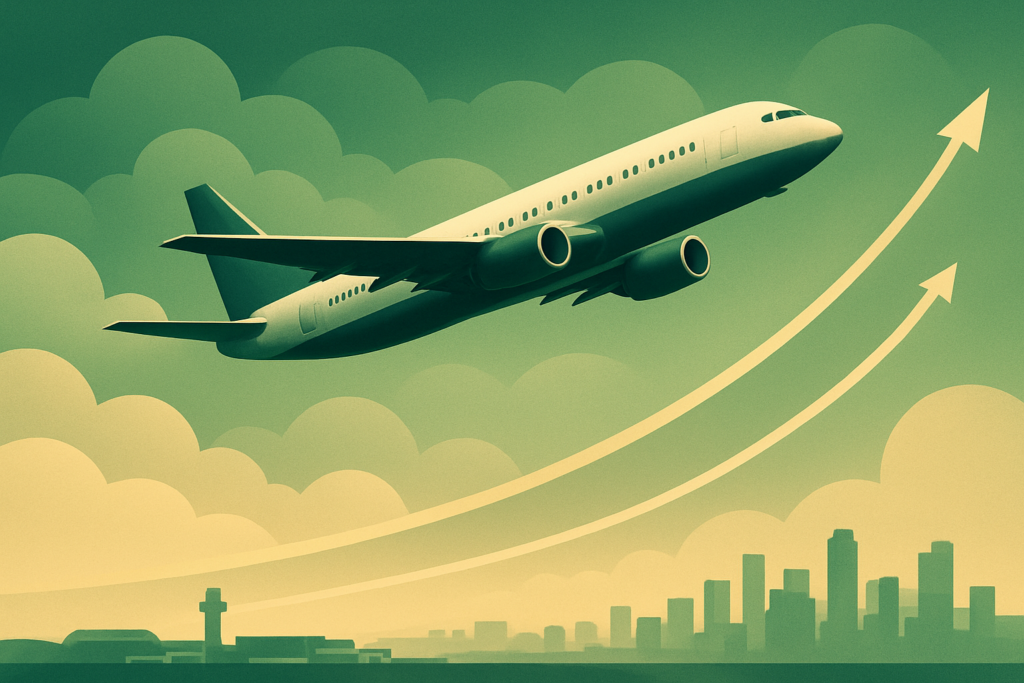
As of January 22, 2026, Southwest Airlines (NYSE: LUV) stands at perhaps the most significant juncture in its 55-year history. Once the renegade of the skies that democratized air travel with low fares and a "no-frills" philosophy, the Dallas-based carrier is currently in the middle of a radical identity shift. With the official launch of assigned seating and premium cabins scheduled for January 27, 2026, the company is attempting to shed its legacy constraints to compete in a market that increasingly rewards premium services and global connectivity.
Historical Background
Founded by Herb Kelleher and Rollin King in 1967 (beginning operations in 1971), Southwest Airlines began as a "Triangle" service between Dallas, Houston, and San Antonio. It famously fought legal battles just to take flight, eventually becoming the poster child for the benefits of the 1978 Airline Deregulation Act. For decades, Southwest was defined by its "Point-to-Point" network, its all-Boeing 737 fleet, and its unique open-seating policy.
However, the 2020s brought unprecedented challenges. Following the industry-wide devastation of the COVID-19 pandemic, Southwest suffered a catastrophic operational "meltdown" in December 2022, which exposed aging infrastructure and led to a $140 million civil penalty. This event served as a catalyst for the modernization efforts currently reaching their zenith in 2026.
Business Model
Southwest’s business model is currently in a state of "hybridization." Historically a Low-Cost Carrier (LCC), it has evolved into a major network carrier. Its primary revenue source remains domestic passenger air transportation, but the "Southwest Way" is being rewritten:
- The "New" Seating Model: Moving away from its iconic open seating, Southwest now offers assigned seats, including an "Extra Legroom" section comprising roughly one-third of the cabin.
- Asset Utilization: To maximize its fleet, the airline recently introduced "redeye" flights, increasing aircraft utilization during off-peak hours.
- Network Strategy: While still primarily point-to-point, Southwest has increasingly embraced "hubs" in cities like Denver, Chicago (Midway), and Baltimore to facilitate connections.
- Bags Fly Free: In a rare nod to its heritage, Southwest maintains its "two free checked bags" policy, a key differentiator against rivals like American Airlines (NASDAQ: AAL) and Delta Air Lines (NYSE: DAL).
Stock Performance Overview
As of late January 2026, LUV shares are trading in the $42.00–$43.00 range.
- 1-Year Performance: The stock has rallied approximately 35% over the last year, largely on the back of investor enthusiasm for the new revenue-generating seating tiers.
- 5-Year Performance: The five-year trajectory remains slightly negative (-5%), reflecting the slow recovery from the pandemic and the 2022 operational crisis.
- 10-Year Performance: With a return of roughly +20%, Southwest has significantly underperformed the broader S&P 500, illustrating its transition from a high-growth disruptor to a mature, high-cost incumbent.
Financial Performance
Fiscal Year 2025 was a year of record-breaking top-line growth coupled with razor-thin margins.
- Revenue: The company reported record full-year revenue of approximately $28 billion.
- Profitability: Despite record sales, net income was volatile. Southwest posted a net loss in Q1 2025 but returned to profitability in subsequent quarters. Full-year EBIT (Earnings Before Interest and Taxes) was approximately $500 million, constrained by a late-2025 federal government shutdown and a spike in jet fuel prices.
- Balance Sheet: Southwest maintains one of the strongest balance sheets in the industry, with an investment-grade credit rating and significant liquidity, though debt levels have risen to fund fleet modernization.
Leadership and Management
The leadership suite at Southwest underwent a "trial by fire" in 2024 and 2025.
- CEO Bob Jordan: Despite a fierce activist campaign by Elliott Investment Management in late 2024, Jordan remains CEO. He has secured his position by adopting many of the activist's demands, including the seating overhaul and board refreshment.
- Board Reform: Following the retirement of long-time Chairman Gary Kelly in late 2024, the board was reduced to 13 members. Crucially, five directors nominated by Elliott—including former airline CEOs—now hold seats, shifting the focus toward aggressive margin expansion.
Products, Services, and Innovations
The January 2026 "Refresh" is the cornerstone of Southwest's current product offering.
- Premium Cabin Tiers: The airline now offers "Extra Legroom" (5 inches of additional space), "Preferred" (front-of-cabin), and "Standard" seating.
- In-Flight Experience: Significant R&D has been poured into upgraded Wi-Fi and in-seat power ports across the fleet, essential for attracting the business travelers the airline now targets.
- Fleet Modernization: Southwest remains committed to an all-Boeing fleet, though it has had to delay the retirement of older 737-700s due to delivery delays of the newer, more efficient MAX models.
Competitive Landscape
Southwest currently ranks 3rd in U.S. domestic market share (~18%), trailing American Airlines and Delta.
- The Profitability Gap: While Southwest competes for volume, its net margins (near 1.5% in 2025) significantly lag behind Delta (7%+) and United Airlines (NYSE: UAL).
- Low-Cost Rivals: Southwest is also being squeezed from below by "Ultra-Low-Cost Carriers" (ULCCs) like Spirit and Frontier, though Southwest's superior brand loyalty and "bags fly free" policy provide a defensive moat.
Industry and Market Trends
The airline industry in 2026 is defined by "Premiumization." Travelers have shown a sustained willingness to pay for more space and better service, a trend Southwest was late to join but is now chasing. Additionally, "Bleisure" travel—combining business and leisure trips—has become the standard, requiring airlines to offer more flexible schedules and premium amenities.
Risks and Challenges
- Boeing Dependency: As an all-Boeing operator, Southwest is uniquely exposed to the manufacturer's ongoing quality control and delivery issues. The Boeing 737 MAX 7—critical for Southwest's smaller-market strategy—is still awaiting full-scale delivery in 2026.
- Labor Costs: New labor contracts ratified in 2024/2025 have ballooned costs. Pilots received nearly 50% raises over four years, placing immense pressure on the airline to increase its "Revenue Per Available Seat Mile" (RASM).
- Fuel Volatility: While Southwest was once a master of fuel hedging, its current advantage in this area has narrowed, leaving it vulnerable to geopolitical shocks.
Opportunities and Catalysts
- Assigned Seating Revenue: Analysts estimate that assigned seating and premium upgrades could generate over $1 billion in annual incremental revenue once fully scaled.
- MAX 7 Certification: The anticipated mid-2026 certification of the MAX 7 would allow Southwest to optimize its network and reduce fuel burn by double digits compared to older aircraft.
- International Expansion: The new seating configuration makes Southwest a more attractive partner for international codeshare agreements, potentially opening new revenue streams.
Investor Sentiment and Analyst Coverage
Wall Street maintains a "Wait and See" approach, with a consensus "Hold" rating.
- Price Targets: Estimates are wide, ranging from a "bear case" of $24.00 to a "bull case" of $60.00.
- Institutional Activity: Major institutional holders have expressed cautious optimism regarding the board's new composition, though hedge fund activity remains high as the market treats the January 27 launch as a "binary event" for the stock's future.
Regulatory, Policy, and Geopolitical Factors
Southwest remains under the microscope of the Department of Transportation (DOT) following its 2022 meltdown. Furthermore, the 2025 government shutdown served as a reminder of the industry's sensitivity to federal policy. Environmental regulations regarding Sustainable Aviation Fuel (SAF) also pose a long-term cost challenge, as Southwest seeks to meet its 2030 carbon reduction goals.
Conclusion
Southwest Airlines in 2026 is an airline in transition. By abandoning the open-seating model that made it famous, the company is making a high-stakes bet that it can retain its "Luv" brand while capturing the higher yields enjoyed by its legacy rivals. For investors, the next twelve months are critical. If the new premium seating model gains traction without alienating the core customer base, Southwest could see a massive re-rating of its stock. However, if labor costs and Boeing delays continue to eat into margins, the "Golden Age" of Southwest may truly be in the rearview mirror.
This content is intended for informational purposes only and is not financial advice. Disclosure: At the time of writing, the author does not hold a position in NYSE: LUV.