Rising hygiene awareness, institutional procurement and dispenser innovation are driving a 5.9% CAGR through 2036, with gel and bottled formats leading adoption.
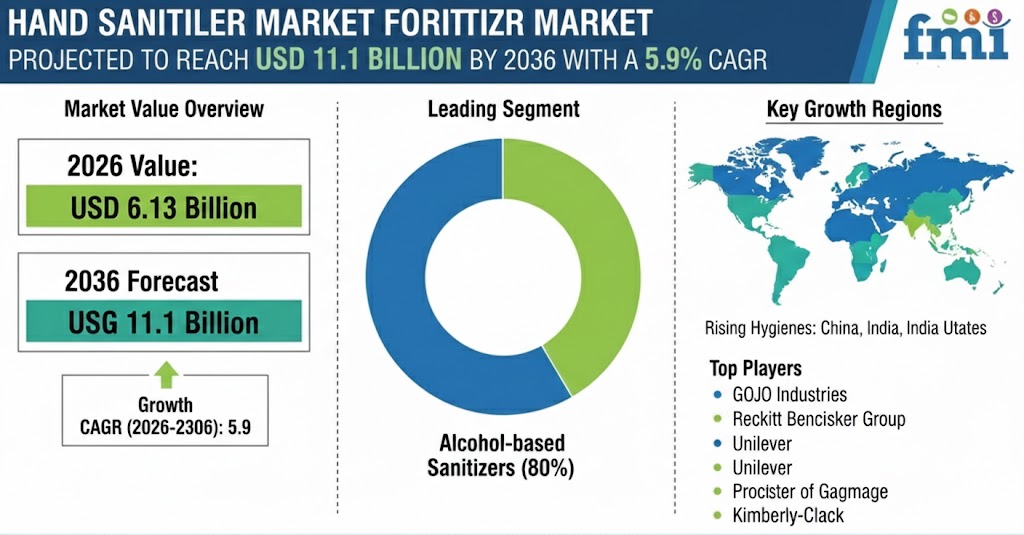
NEWARK, DELAWARE / ACCESS Newswire / February 6, 2026 / The global hand sanitizer market is poised for steady expansion, expected to grow from USD 6.13 billion in 2026 to USD 11.1 billion by 2036, according to a detailed new forecast by Future Market Insights (FMI). This growth trajectory, reflecting a CAGR of 5.9%, is primarily fueled by rising hygiene consciousness worldwide and the widespread adoption of convenient, portable sanitizing solutions.
The COVID-19 pandemic catalyzed a surge in demand, but even beyond the pandemic era, hand sanitizers remain essential in personal care and public health, underpinning consistent market growth. Alcohol-based sanitizers dominate the landscape due to their proven germ-killing efficacy, while non-alcoholic formulations gain traction among consumers seeking milder, skin-friendly alternatives.
Product Format and Packaging Trends: Gel and Bottles Lead the Way
Among product types, gel-based sanitizers are forecasted to maintain leadership with approximately 43% of global demand in 2026. Their quick-drying nature, ease of application, and ability to retain moisturizing additives such as aloe vera make them a preferred choice for frequent users. Gels also reduce wastage due to their thicker consistency, providing longer-lasting hand coverage, a critical factor for both individual consumers and institutional buyers.
In terms of packaging, bottled hand sanitizers, including pump bottles and flip-top caps, dominate the market. Bottles accounted for about 53% of sales in 2026, prized for their convenience, portability, and ease of hygienic dispensing. Features such as touchless dispensers and refillable containers are gaining momentum, especially in institutional settings where reducing contamination risk and waste are paramount.
Retail channels, especially supermarkets, pharmacies, and convenience stores, remain the principal sales outlets for hand sanitizers, accounting for nearly 47% of sales. The strategic placement of hand sanitizer products near checkout counters encourages impulse purchases, further driving volume.
Market Challenges and Industry Responses
Despite strong growth prospects, several challenges persist:
Raw Material Cost Volatility: The price of alcohol and packaging materials such as plastics can fluctuate significantly, affecting production costs and retail pricing.
Environmental Concerns: The widespread use of single-use plastic bottles has raised sustainability issues. Manufacturers are responding with refill systems, concentrated formulas that dilute at point-of-use, and biodegradable packaging materials.
Regulatory Compliance: Increasing scrutiny from regulatory bodies, including the U.S. Food and Drug Administration (FDA) and European Medicines Agency (EMA), demands stringent quality control and labeling transparency, especially for new formulations and natural ingredient claims.
Market Saturation and Competition: Established markets face saturation, leading to intensified price competition. Companies are differentiating through product innovation, eco-conscious formulations, and digital marketing to maintain consumer loyalty.
Innovation and Emerging Trends
The hand sanitizer market is witnessing several transformative trends:
Formulation Innovation: Advances in non-alcohol and alcohol-free sanitizers with enhanced skin moisturizing properties and natural ingredients address growing consumer demand for gentler products.
Sustainability Initiatives: Eco-friendly packaging, refill stations, and reduction in plastic waste are key focuses. Brands are developing concentrated sanitizer refills and reusable containers to minimize environmental footprint.
Technology Integration: Smart and sensor-enabled dispensers, especially in commercial settings, provide touchless operation and usage tracking, improving hygiene and inventory management.
Customization and Scent Variants: Manufacturers increasingly offer scented and moisturizing variants to cater to personalized consumer preferences and increase repeat purchases.
Growth Drivers and Market Challenges
The market's expansion is propelled by heightened public awareness of hygiene, institutional adoption across healthcare, retail, education, and hospitality sectors, and supportive government hygiene initiatives worldwide. However, challenges such as raw material cost volatility, environmental concerns around single-use plastic packaging, and market saturation persist. Manufacturers are innovating with eco-friendly packaging, alcohol-free formulations, and digital dispenser technologies to address these issues.
Regional Insights: North America and Asia Pacific Lead
North America and Europe remain dominant markets, driven by stringent hygiene regulations and product availability. The Asia Pacific region is set to experience the fastest growth due to rising health concerns, expanded production capabilities, and increased consumer access in India, China, and neighboring countries.
Country |
Projected CAGR (2026-2036) |
Primary Growth Drivers |
|---|---|---|
China |
7.5% |
Urbanization, government hygiene mandates, and e-commerce |
India |
7.2% |
Public health initiatives and affordable sanitizer options |
United States |
6.8% |
Institutional demand and consumer hygiene awareness |
Germany |
6.7% |
Premium products and healthcare standards |
France |
6.6% |
Eco-conscious consumers and premium skincare sanitizers |
United Kingdom |
6.5% |
Eco-friendly packaging and touchless dispensers |
Competitive Landscape: Innovation and Diversification
The hand sanitizer market is moderately consolidated, led by GOJO Industries Inc. (Purell), Reckitt Benckiser (Dettol, Lysol), Procter & Gamble (Safeguard), and Unilever (Lifebuoy). These key players focus on product diversification, eco-friendly packaging, and technological innovations like smart dispensers and refillable solutions.
Smaller and niche players such as The Himalaya Drug Company, SarayaCo., and Seatex Ltd. are capturing market segments with natural, organic, and hypoallergenic sanitizers, responding to growing consumer demand for clean-label products.
For an in-depth analysis of evolving formulation trends and to access the complete strategic outlook for the Hand Sanitizer Market through 2036, visit the official report page at: https://www.futuremarketinsights.com/reports/hand-sanitizer-market
Related Reports:
Hand Sanitizer Spray Pen Market: https://www.futuremarketinsights.com/reports/hand-sanitizer-spray-pen-market
Handloom Product Market: https://www.futuremarketinsights.com/reports/handloom-product-market
Handheld Police Radar Guns Market: https://www.futuremarketinsights.com/reports/handheld-police-radar-guns-market
Hand & Arm Protection (PPE) Market: https://www.futuremarketinsights.com/reports/hand-arm-protection-ppe-market
About Future Market Insights (FMI)
Future Market Insights (FMI) is a leading provider of market intelligence and consulting services, serving clients in over 150 countries. Headquartered in Delaware, USA, with a global delivery center in India and offices in the UK and UAE, FMI delivers actionable insights to businesses across industries including automotive, technology, consumer products, manufacturing, energy, and chemicals.
An ESOMAR-certified research organization, FMI provides custom and syndicated market reports and consulting services, supporting both Fortune 1,000 companies and SMEs. Its team of 300+ experienced analysts ensures credible, data-driven insights to help clients navigate global markets and identify growth opportunities.
For Press & Corporate Inquiries
Rahul Singh
AVP - Marketing and Growth Strategy
Future Market Insights, Inc.
+91 8600020075
For Sales - sales@futuremarketinsights.com
For Media - Rahul.singh@futuremarketinsights.com
For web - https://www.futuremarketinsights.com/
SOURCE: Future Market Insights, Inc.
View the original press release on ACCESS Newswire